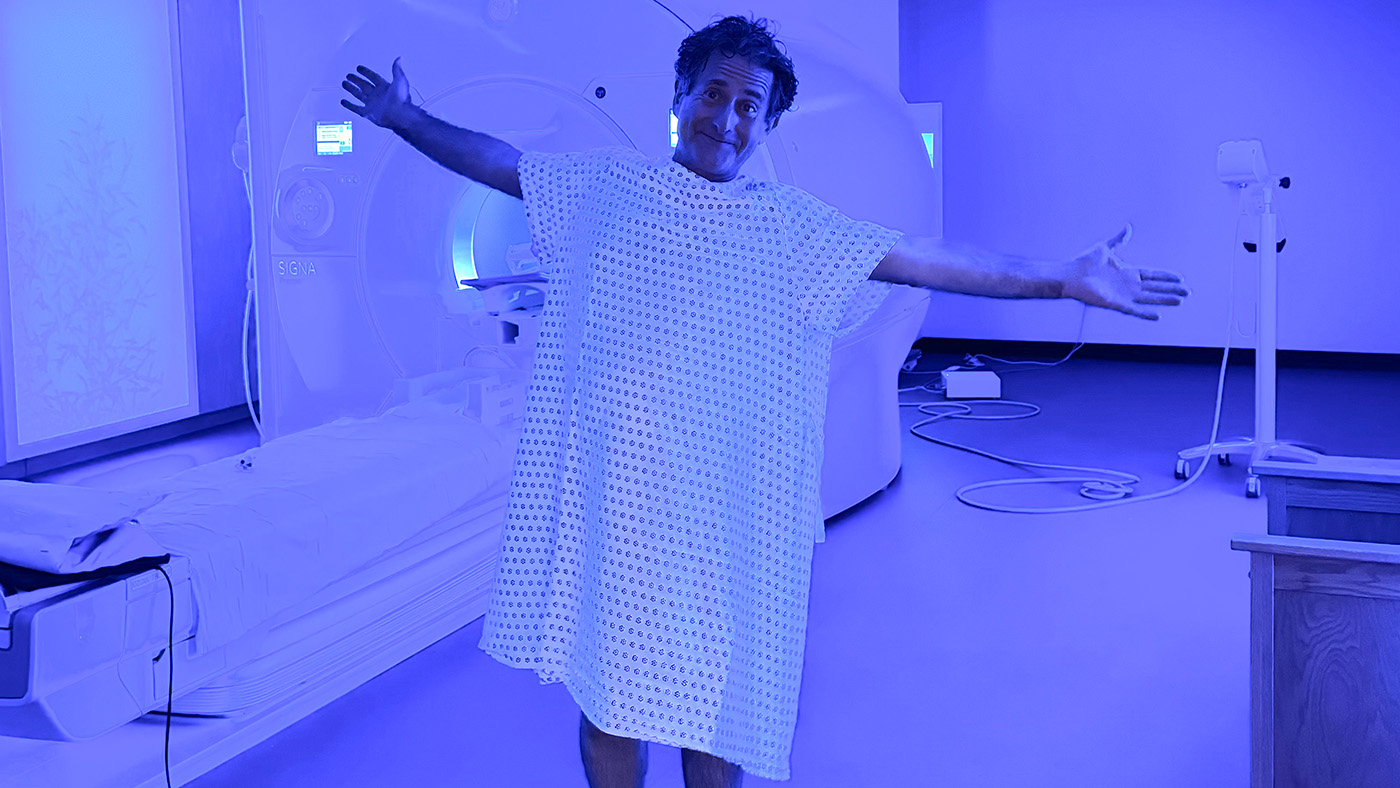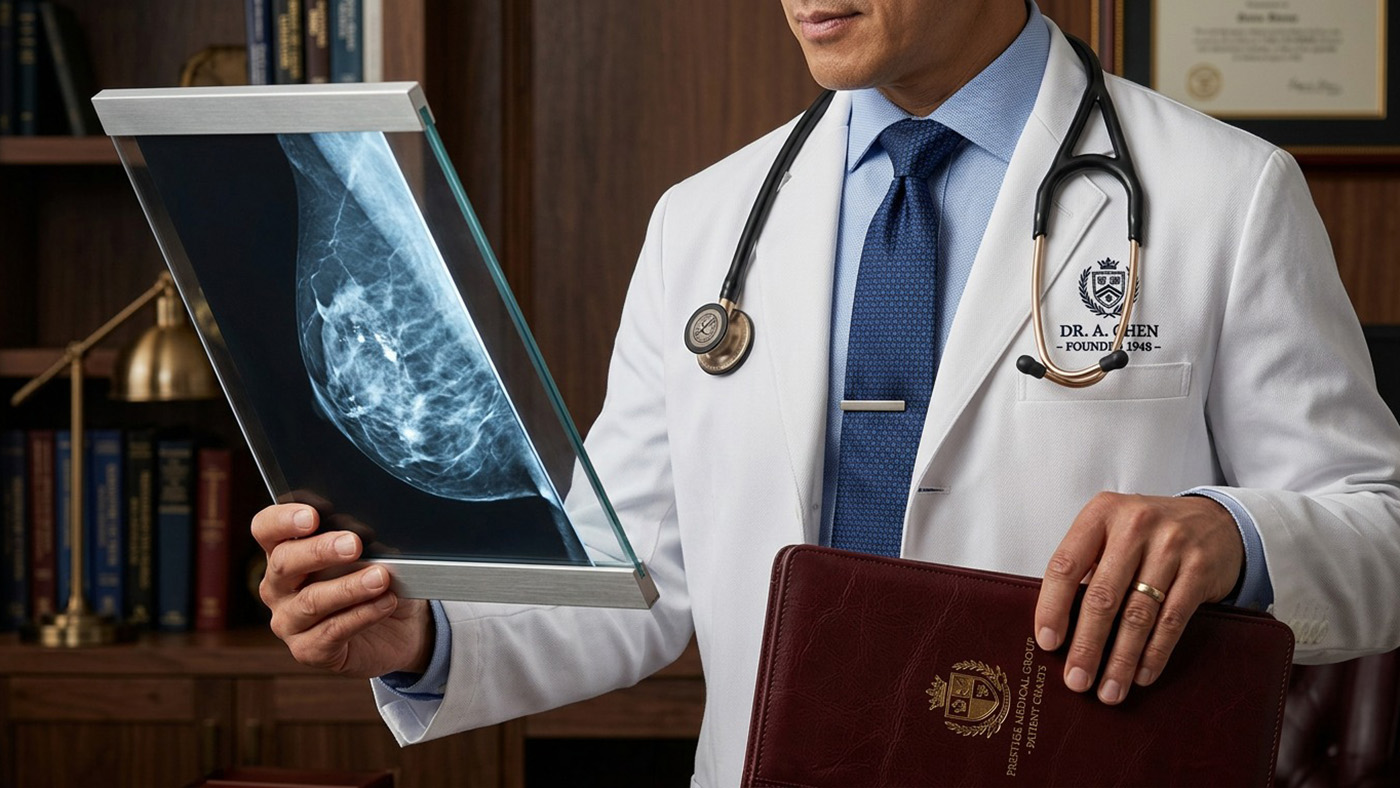
Medicine’s Golden Age Helps Hypochondriacs Like Me Sleep at Night
They say that AI is the worst thing that could ever happen to hypochondriacs like me. They’re lying. It’s the best thing. AI is already a better doctor than any human I’ve ever seen—and it doesn’t make me wait two months for an appointment and then breathe waiting-room air full of mutated contagions.
Last month my human doctor felt the painful, inch-long lump behind my left nipple.
“Ohhh, there it is,” he said. “Hmm, we’ll have to check this out.”
This would have sounded like the medical equivalent of “thoughts and prayers” to me had I not already been diagnosed by Microsoft CoPilot. As soon as I found the growth, I jumped out of the shower and typed my symptoms into the AI program. I didn’t even towel off first.
After being asked a series of very specific questions, I was informed that I had a better than 99.95% chance of being totally fine. Without this assurance, I would not have slept a wink during my weeklong mammogram wait.
According to a 2024 survey, over 60% of Americans now use AI to answer health questions. And why not? A Journal of the American Medical Association study recently revealed that clinicians rated AI-generated medical explanations as more empathetic and thorough than human doctors’ responses.
My human doctor responds to health portal messages I send him within 24-36 hours later with: “Pls schedule f/u.” (The first time I saw that, I thought he was cursing me out.)
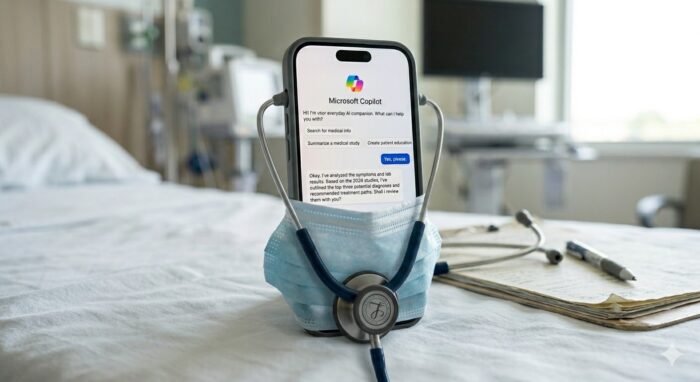
AI creates an image of itself as a doctor.
Dr. AI responds within three seconds with a five-paragraph dissertation that, so far, has calmed my existential dread.
Of course, for legal reasons, it begins every session by stating, “This is NOT medical advice” and/or “AI may be wrong.” But it never is.
“It’s surprisingly accurate,” a doctor friend of mine confirmed. “I use it all the time, but then I double-check just to be sure. And so far, it’s always been right.”
I’m not saying that all computer doctoring is good. For more than 20 years, Dr. Google was a total nightmare. It brought up only the worst-case medical scenarios for every symptom I searched. Tingling in the foot? Multiple sclerosis. A headache? A brain tumor, obviously.
And the patient essays it found were always horror scenarios, because only people who are in those scenarios bother to write about them. No one writes 1,200 heartfelt words about a test that comes back negative. They just go to brunch.
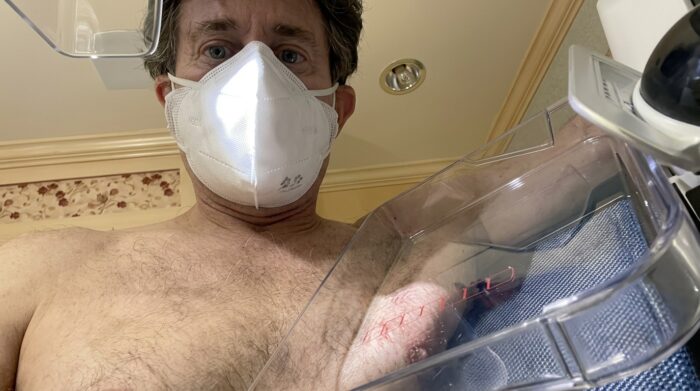
I sneaked a selfie during my “manogram.”
My “Manogram”
I won’t pretend I wasn’t still sweating during the 20-minute wait for the results of my “manogram”—a term I proudly coined to amuse the technician performing the X-ray scan. It did not work.
In fact, the wait caused me to contemplate how my family would get along in a future without me. (The answer, even in my own nightmare scenario, was just fine.)
I was significantly less relieved to hear “gynecomastia” than I would have been had CoPilot not already diagnosed me with it. That’s the medical term for benign breast-tissue enlargement, which affects about half of all men at some point.
OK, fine. It’s man boobs.
But Dr. AI didn’t stop there at being more useful than a human. It told me that my “moobs” weren’t necessarily permanent; that it’s possible I wasn’t on my way to becoming a customer of Cosmo Kramer’s “Bro”—or, as Frank Costanza insisted on calling it, the “Manssiere.” (From the sitcom Seinfeld, Season 6 episode “The Doorman.”)
And that’s because one of the 30 supplements I take every day might be responsible. I always go over every new addition with Dr. AI, to check for interactions with my other medications and supplements, so it knows my entire stack.
The Culprit
The only thing it could possibly be was fenugreek, the seemingly innocuous Indian spice. Ironically, I took it because it, well … let’s just say it works for my wife. Some studies have found that fenugreek increases nitric oxide-related blood flow to the penis and improves testosterone bioavailability.
Though fenugreek made me feel like more of a man, it was trying to change me into a wet nurse.
Fenugreek also contains substances called furostanolic saponins, Copilot informed me, which can increase prolactin—the hormone that triggers lactation—in some males. Especially those males who take twice the freaking recommended dose because they like the penis thing.
“480 mg of 10:1 extract = 4.8 grams of raw fenugreek seed per day,” Dr. AI scolded me. “Your intake is effectively double the high end of the extract range. I didn’t tell you to take that much.”
That was all human error—mine.
A day after quitting fenugreek, my pain began to subside. According to Dr. AI, my “Manssiere” days would be over in six weeks.
I informed my human doctor of the culprit, and he tried claiming ownership of the correct diagnosis, though what he initially told me was to cut down on soy.
“Always investigate the supplements; it’s one of my mantras,” he wrote to me via the portal. “Thanks for doing the research.”
Research? You mean simply asking a question of a more knowledgeable physician and getting the correct answer in three seconds?
For hypochondriacs like me, this is truly medicine’s golden age.