How To Grow $50 Kale Salads
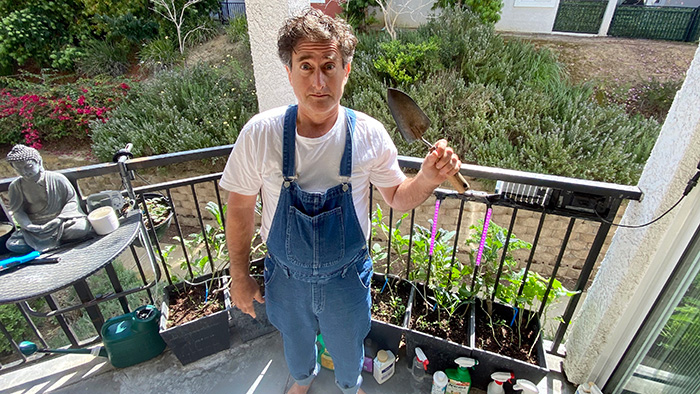
I’m not that guy—the one who grows his own food. Yet here I am: The founder and chief executive officer of Levitan Farms, the world’s most expensive organic agricultural operation on the balcony of a two-bedroom apartment.
I’m not a good balcony farmer, but I am learning; at a great expense that I hide from my wife. (It’s a good thing she never reads my columns.)
After tallying all the materials I’ve experimented with—and mostly failed—in the past five years, I’ve spent about $2,500 growing fresh kale that tastes exactly like the fresh kale I could have purchased for $3.99 a week at Whole Foods. And that doesn’t include the cost of my labor or dignity.
I started this delusion thinking I would save cash. Adorable. It turns out, economies of scale require scale, and balconies have none. So why do I continue doing it? Because I can’t accept defeat.
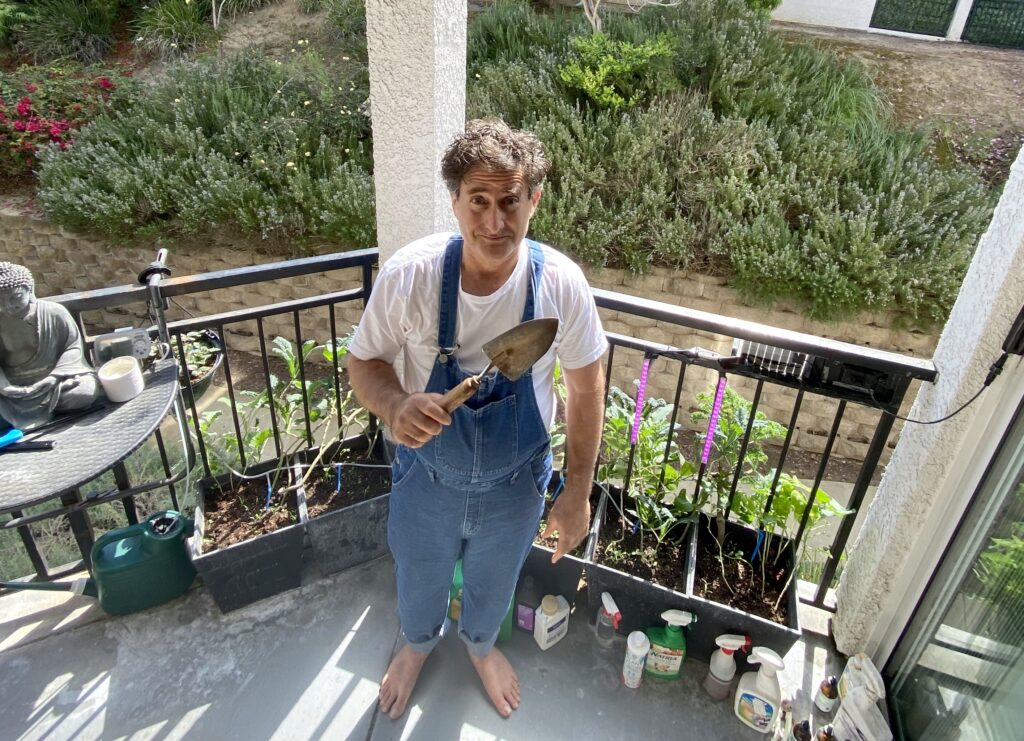
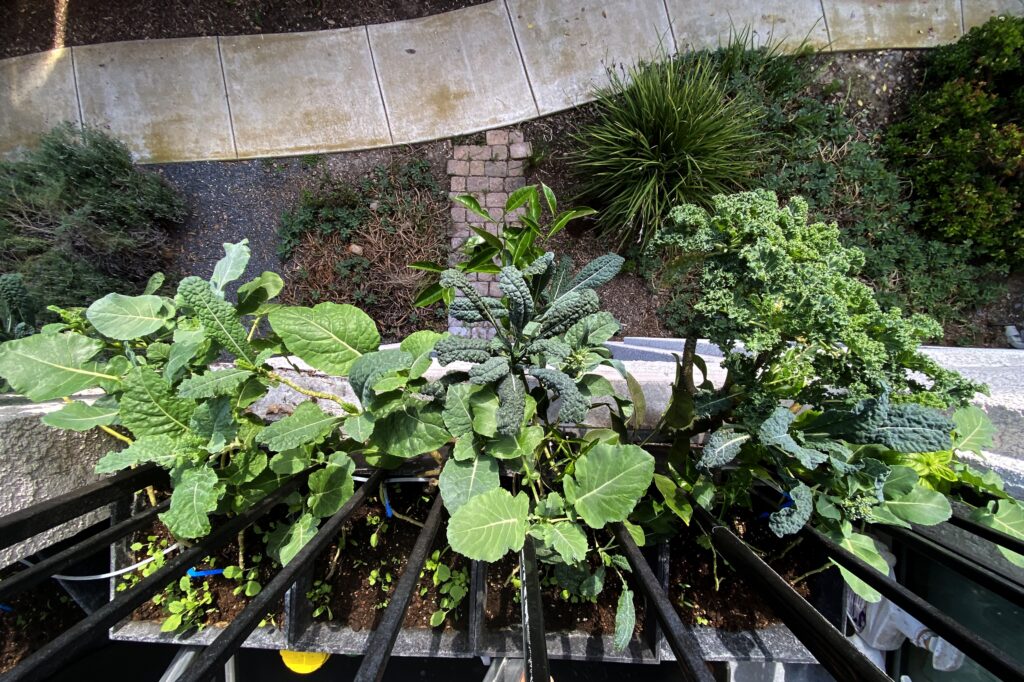
When I extended my pretend initial public offering to my wife for just $200, she laughed and called my dream “a huge waste of time.” Well, check out the photos accompanying this column and tell me … who’s laughing now?
OK, she still is.
The Dream: Endless Greek Salads
The reality: My first $200 was wasted on already-fruiting jumbo organic tomato, cucumber and pepper plants from the most expensive neighborhood nursery I could find—because I wouldn’t put anything in my mouth from the garden section at Home Depot.
Then I watched these beautiful organisms slowly die in ways that seemingly defied botany, even with the help of AI. (Brown leaves? “Could be too much water, could be too little.”) Great, thanks!
Google set me straight. My balcony gets four hours of sunlight a day. The crops I selected all require at least eight. So I splurged $100 more to resuscitate them. The solar grow light didn’t work, but it is a great nighttime disco light.
From then on, I grew the green-and-leafies only. And, boy, was every cabbage moth in a 5-mile radius happy about that. (More on them later.)
Bad Pot Deal & Dripping the Ball
The $300 “self-watering” pots promised passive hydration. Instead they created an inch-deep moat too deep for any root to reach, but made a perfect fungus-gnat luxury spa. Add $200 more for mosquito-and-gnat pellets, Orange Guard natural pesticide and, finally, better pots.
Of course, no one in their right mind—I assume this includes you—would irrigate balcony plants. But my self-watering pots presold me the fantasy of never having to ferry a watering can 10 feet outside my living room. So, when they failed me, I rage-purchased a $200 drip system.
This system not only requires me to ferry the same watering can out to the balcony every two days to supply it, but it also delivers the bonus of black mold in its tubes that needs monthly vascular surgery to remove.
Worm Wars
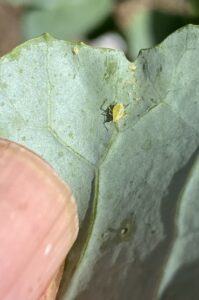
Those little white butterflies flitting around rosemary bushes are so cute … when you’re not a balcony farmer. They’re actually cabbage moths, the Luftwaffe of the garden world. Where we live, they lay nearly invisible eggs all year-round, and the tiny green worms that hatch from them enjoy $50 salads even more than I do.
Then they also defecate it back out onto the leaves—even the ones they didn’t munch holes through. (Pro tip: No amount of rinsing renders worm poop psychologically removed enough to consume.)
Countermeasure: An armory of faux “non”-pesticides that cost another $200. These include BT, aka Bacillus thuringiensis; neem oil; spinosad; and anything else branded “natural” with five Amazon stars from people who clearly never met year-round cabbage moths. Oh, and add brand new soil to that tally when I accidentally “non-poisoned” it.
Nothing stops the egg-laying, though. That’s why my wife often finds me crouched like a Star Wars bounty hunter lying in wait to ambush the white buggers with a spritz bottle of vinegar. I can’t do that all day long, though, so that’s why she also finds me combing the underside of every last Brassicaceae leaf for microscopic eggs like a Victorian governess checking for lice. These need to be squirted off with a spritz from a water bottle, which I sometimes confuse with my vinegar bottle and kill the plant.
You looked up Brassicaceae, didn’t you? That’s OK, I did too.
The Hootening/Et Tu, Fido?
Once my cabbage worms are under control—and I’m just saying that to transition to a new topic because they never are—another problem beckons: finches. These adorable miniature dinosaurs murder every seedling as it pokes through the soil. The solution? Dropping $80 more on electronic owls that screech when motion triggered.
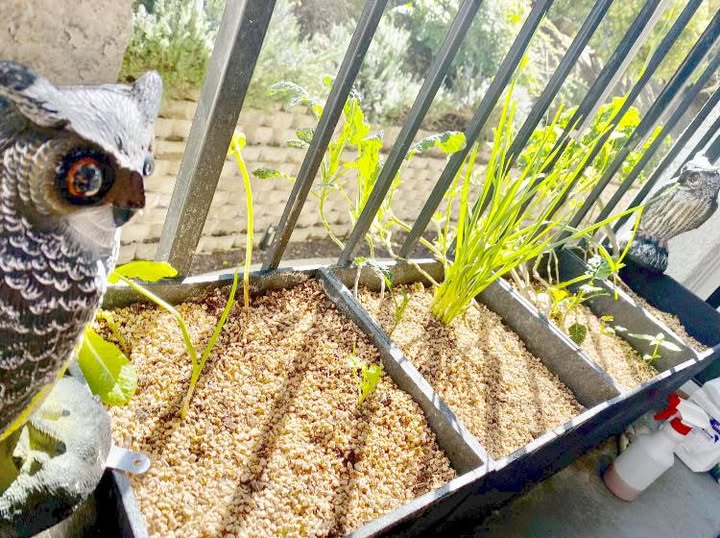
They worked, but woke my daughter at 4 a.m. with dying-battery death hoots. She “accidentally” dropped and shattered both while trying to locate and turn off the hooting one because they were both “wet with dew.”
I’d have done the same and lied about it too (proud dad moment).
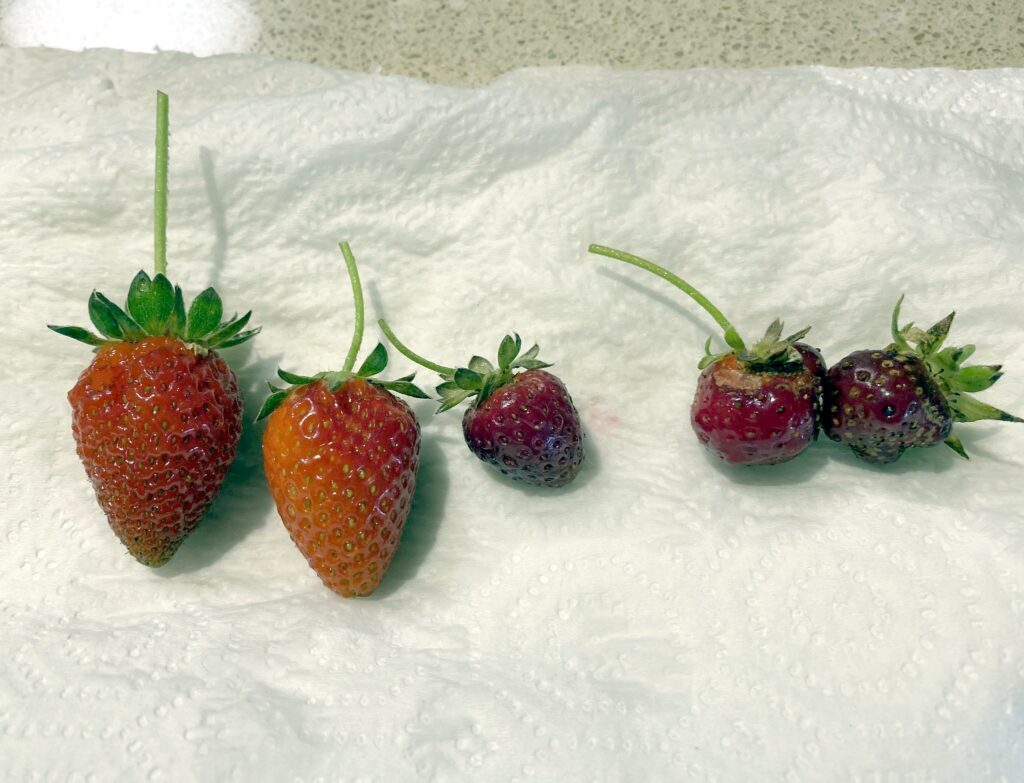
Enter the most troublesome pest of all—our sweet little perpetrator of the Great Strawberry Massacre of 2022. The red rim around our puppy’s mouth gave her away. Add to my running total a $75 elevated railing shelf to hang the next berry batches out of the dog’s way; batches I pay $70 a year for from Home Depot. (Eff it, shame is dead.)
Seeds of Doubt?
So, after five years of paying 50 times more for produce that’s laced with poop, eggs and chew holes— produce that’s turned me into a deranged warlord battling moths, birds, and some insects possibly not yet even categorized by science—would I recommend balcony farming for everyone out there?
Absolutely I would! Honestly, no accomplishment has ever felt sweeter than making this stupid thing work, because I refuse to let it beat me.