Since I stopped growing in 10th grade at 5 foot 5 inches tall, I always felt a pull toward horse racing. It’s the only sport I might actually be too tall for. I assumed I’d missed my window, though—until a friend’s father, who owned a racehorse, offered me the chance to live out my destiny.
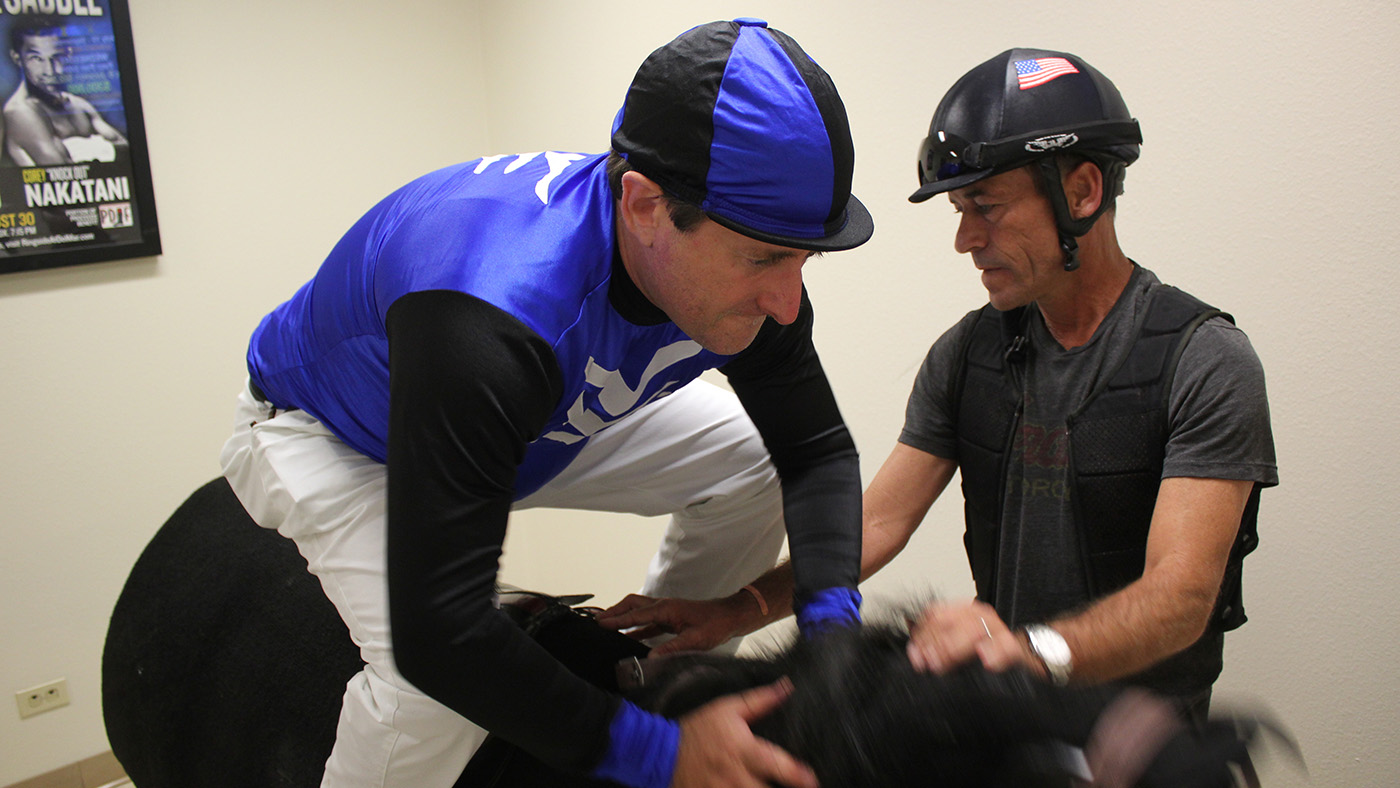
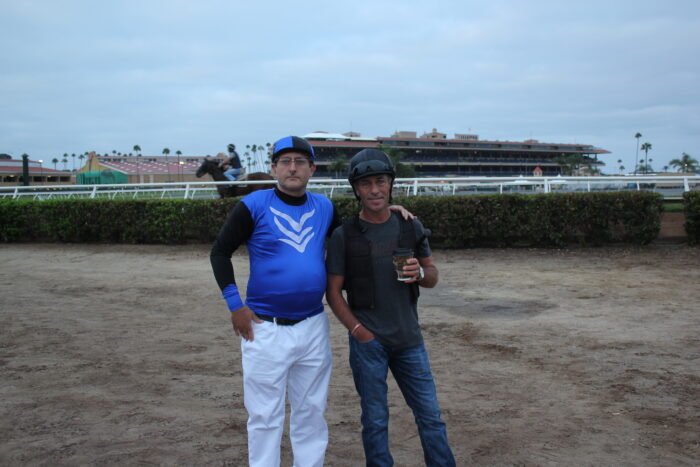
My training began at 6:30 a.m. in the jockey exercise room at Del Mar Racetrack in San Diego. My instructor, Hall of Fame jockey Gary Stevens, wasted no time assessing my potential on the Equicizer: The mechanical horse Tobey Maguire used to help him pretend to be a jockey in Seabiscuit.
“Your belly’s in the way!” he shouted before even switching the machine on.
Are you kidding me? I thought to myself.
The year was 2017. Stevens was 50 at the time and had already retired once after 5,000 wins. He spent a few years acting in Seabiscuit and HBO’s original television series Luck, starring Dustin Hoffman. He then returned to racing because he still had the bug.
Positioning for Jockey
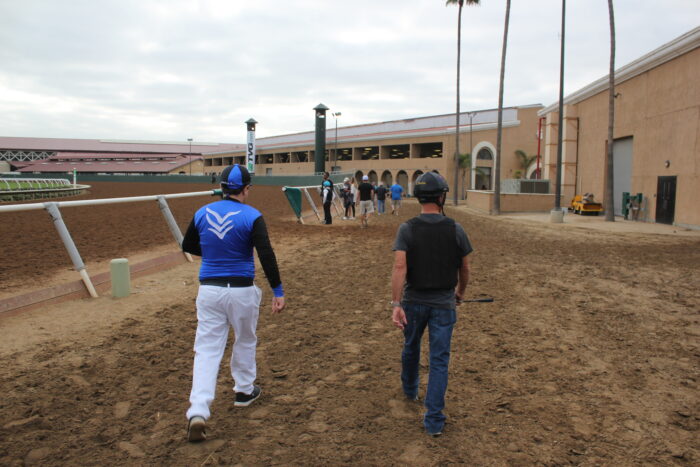
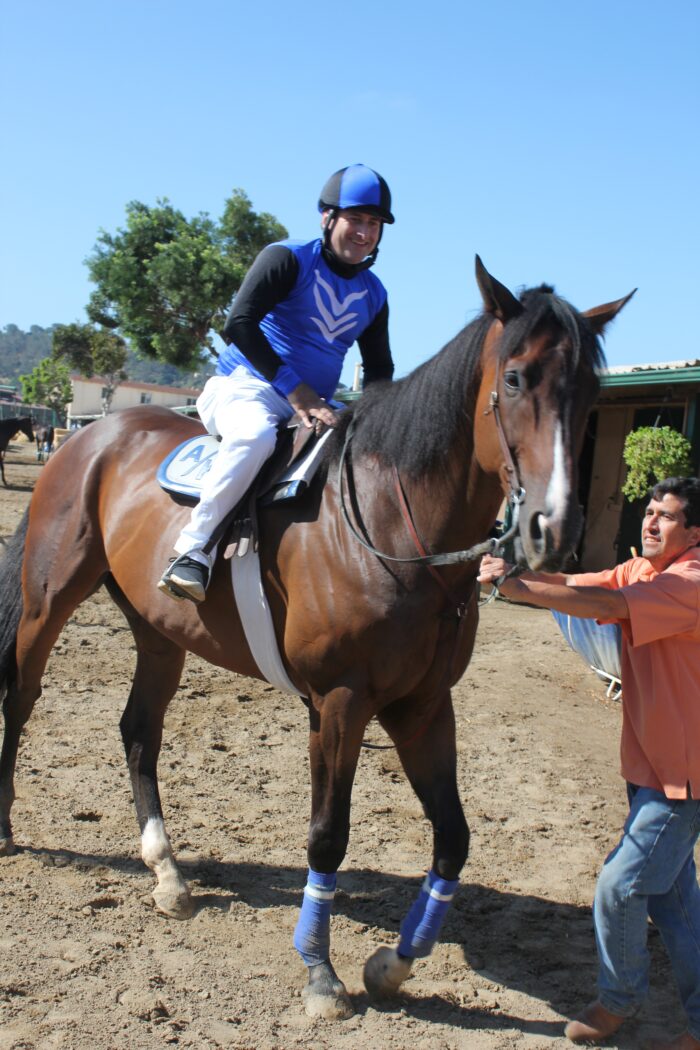
Stevens walked me toward the stable to meet my training horse, a powerhouse named Tiger—as if I needed reminding that I was about to mount a dangerous animal. Jockeys spotted me in racing silks that did nothing to hide my 167 pounds. When they realized I was in on the joke, they let loose.
“Hey, it’s the next Chuck Lopez!” one yelled.
“He’s looking for an agent!” Stevens responded.
Fine, I weighed 177 pounds. And here’s where I learned the truth: Jockeying isn’t about height at all. It’s about weight. Short people just happen to weigh less. Stevens is 5 foot 4 inches tall. He weighed in at 120 pounds that morning, but this was a problem because that day’s race program listed him at 116.
“I thought I was lighter than that,” he muttered. “My whole day just changed in three seconds,” he said.
Because races are won by inches, 2-3 pounds can decide everything. Stevens excused himself to attack the Equicizer like it owed him money.
“Weight is a constant awareness,” he said. “On vacation, I won’t even step on a scale. It makes me anxious.”
In His Blood
Stevens entered racing at age 14 in Idaho. His dad was a trainer, his mom a rodeo queen.
“What motivates me now is the same thing that motivated me then—winning,” he said.
The average annual income in 2026 for a U.S. horse jockey is $60,000-$120,000, according to The Racing Forum; although other sites report an average income of around $50,000-$55,000 per year. But even winning million-dollar purses doesn’t make a jockey rich.
“Sixty percent goes to the owner,” Stevens explained. “You get 10% of that. Then you pay your agent 25% percent, your valet 2.5%, and stake the barn workers. You’ve got to be in it for more than the money.”
That includes the danger. Since 1940, between 715-750 jockeys died on the job. Stevens, whose nickname is “Bionic Man” because of his replacement parts, was nearly one of them. He showed me a YouTube clip titled “2003 Arlington Million (fall),” synced to “Chariots of Fire,” in which he’s thrown from a horse and kicked repeatedly.
“That’s from the nerves from my broken neck,” he said, pointing to his fingers twitching as he lay motionless on the track.
Then he stared directly into my soul and asked, “So you really think you have what it takes?”
Spooked at the Starting Gate
Tiger’s trainer, Manny, waved us over. It was time.
I’d love to say I thundered Tiger down the dirt track, destiny coursing through my veins. I’d love to say that, but Tiger was a 10-year-old lead pony that no longer raced. Lead ponies walk the procession of racehorses to the starting gate for each race.
The only dirt I touched was beside Tiger’s stable. And Manny walked him the entire time, citing “liability,” “regulations” and “sanity.”
“This is horse hockey!” I protested.
“Have you ever even ridden before?” Stevens asked.
“Absolutely! At summer camp on Long Island, I rode a stallion named Mr. Ted who walked in circles and let you feed him carrots. I dominated Mr. Ted,” I replied.
“My apologies!” Stevens said, laughing.
Eventually, my whining wore Manny down. He let Tiger go. I dropped into jockey stance, then gave Tiger the gentlest kick imaginable. He lurched forward, I slipped backward. Unlike Mr. Ted’s saddle, there was no giant knob to grab.
For three seconds, until Tiger slowed back down, my life flashed before my eyes … and I still can’t believe I wore parachute pants in college.
“That three seconds was how it feels,” Stevens told me afterward.
Other than our height, Stevens and I now share something else in common: We’re both ex-jockeys.
A year after training me, he suffered a second spinal injury at Del Mar. Doctors warned him that continuing to ride could lead to paralysis. He retired for good and now works as a racing analyst and jockey agent.
I continue pretending I’m qualified for dreams I have no business pursuing.