How I Learned To Bathe in the Beauty and Uniqueness of Congaree National Park
A group of young artists, writers and volunteers in South Carolina gathered around Congaree National Park to imagine a slower, more intimate vision of preservation. One rooted less in transaction and more in affection for place.
You do not go to the forest to master it. It is not a mountain to conquer. It is not a wave to ride or rapids to survive. It is not like the wind we try to harness. You go to the forest to look and listen. You bring curious attention and possibly surrender to it. Some use the term bathe. You go to bathe in the forest. It is its own luxury and your work there is never finished.
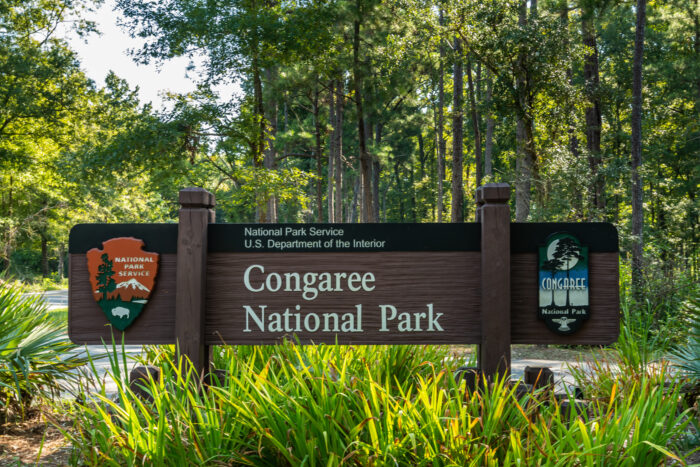
I was familiar with Congaree National Park. I’d been there a handful of times. But I had not fallen in love with the forest. That began when I saw a call for poetry, essays and artwork celebrating it.
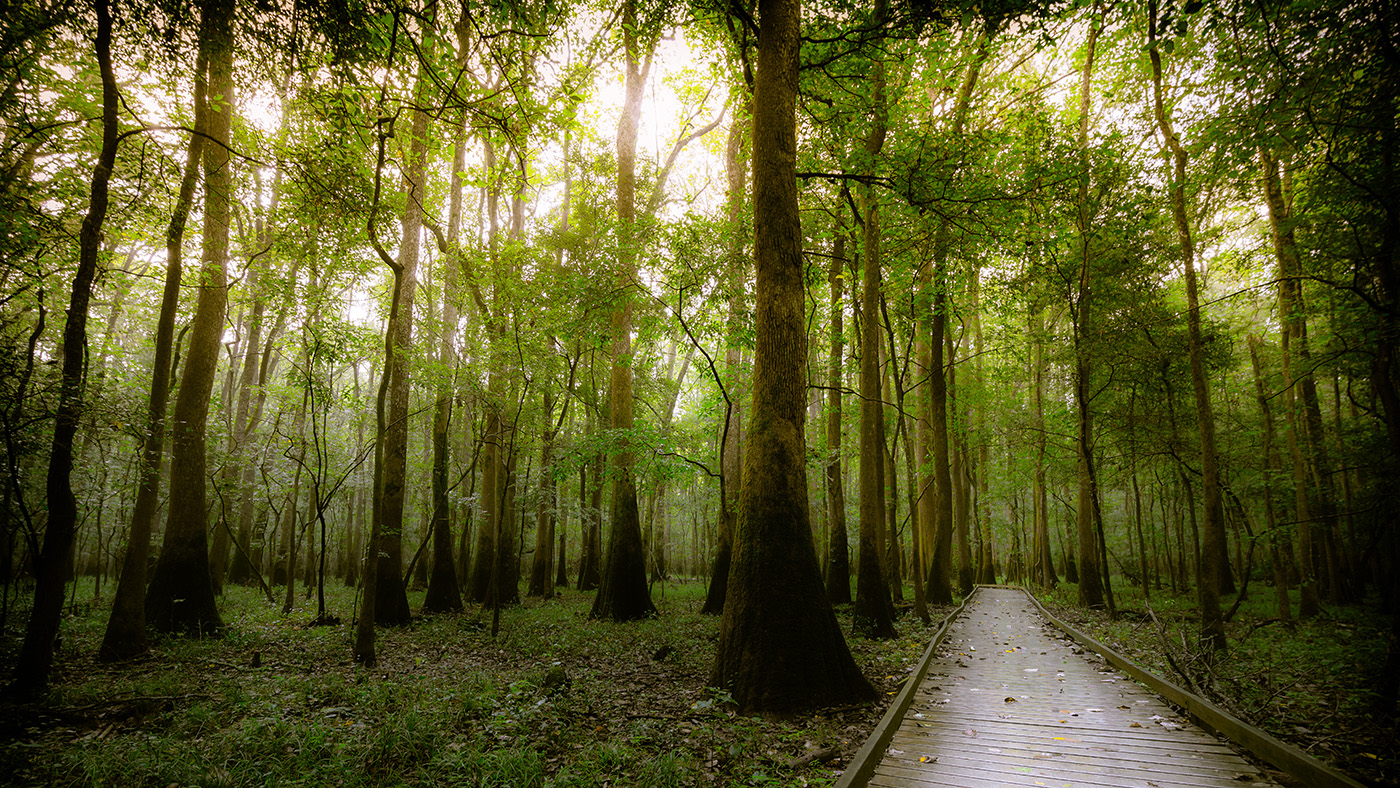
In researching and writing my own submission to Old Growth: An Anthology Inspired by Congaree National Park, I learned that Congaree is the largest intact expanse of old-growth bottomland hardwood forest remaining in the southeastern United States. It comprises a rare ecosystem shaped by floodwaters, biodiversity, and histories far deeper and more layered than I had understood from my earlier visits.
Maggie Olszewski, a 25 year old, knew this forest better than I did; she’d visited it often in her childhood. She describes it as the “park that kind of raised me.” After writing a poem about it and talking with her father, she came upon the idea of an anthology to “highlight its beauty and celebrate it with other fans of the space.”
Olszewski turned to local author Cassie Premo Steele to brainstorm possibilities. Steele had already authored 18 books, including Beaver Girl, a novel set inside Congaree, and had worked as a national park volunteer teaching seasonal Forest Wellness Journaling classes there for the past six years.
What formed was a collaboration between literary and visual artists that invited the community to experience Congaree with renewed attention. Submissions came from writers, photographers and artists moved by the park’s haunting beauty and ecological significance.
Preservation often conjures institutional fundraising, donor circles and formal conservation campaigns. This group moved differently. They were not experienced philanthropists establishing a transactional fundraising model. Olszewski enlisted two friends. Then another and another joined the project. A hopeful, energetic collective of young women from varying generations who often resist hierarchy and are strongly mission-driven. They looked to Steele for guidance.
Steele reflected on the generational differences that shaped the collaboration. While she preferred emails and Word documents, the younger organizers instinctively navigated group texts, spreadsheets, apps and other collaborative digital tools. Yet rather than divide the group, those differences became part of the project’s strength. As Steele described it, they “had to work together in our generational diversity in the same way that the Congaree biosphere region does—supporting an abundance of ecodiversity that makes this place so rare and unique.”
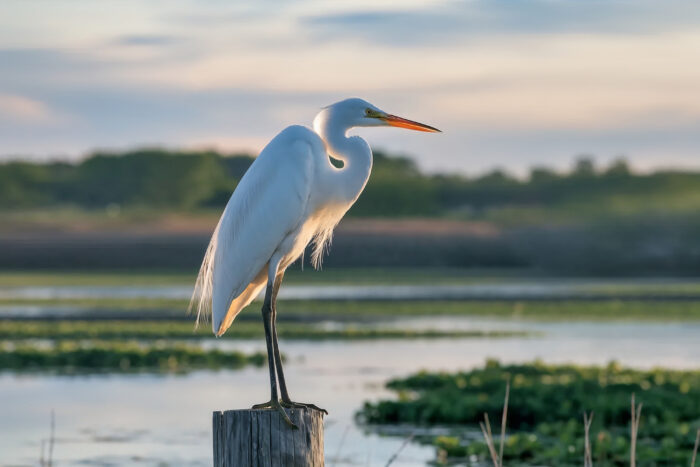
In the months when the group was gathering submissions for the anthology, a community began looking at this old growth in a new, intentional way. I began by jotting down phrase after phrase of what I remembered from my visits. The boardwalk. The damp stillness. The delight of seeing barred owls, long-legged egrets and bald cypress knees rising from dark waters like prayers.
But I also dug deeper. Not in myself but in history. I discovered the layered story of a landscape that both harbored many and resisted destruction by others; a place of survival and a place that survives.
The group asked local art teachers to encourage student submissions, continuing an older tradition: One generation introducing the forest to the next.
When the anthology held its launch party, it was not at a black-tie fundraiser inside a formal institution. It was hosted at an artist co-op. An older, rather nondescript house in a working-class neighborhood. The readings were held in the backyard. A land acknowledgement was read before the announcements began.
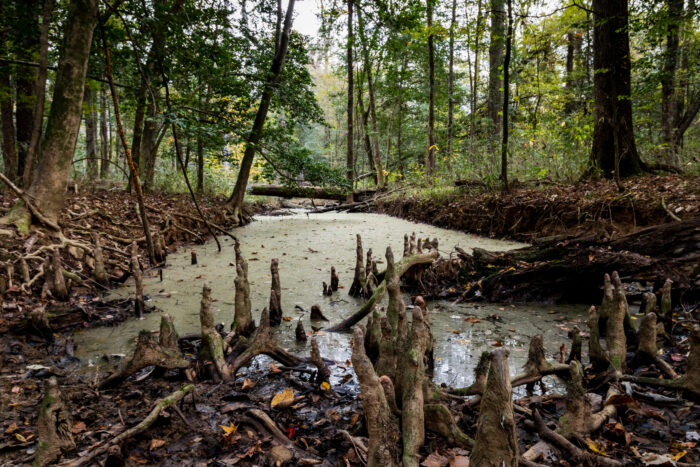
In this hyperdigital age, we slowed and borrowed from one another. There was little talk of money that evening, though all proceeds from the book will go to Friends of Congaree Swamp. What mattered was reverent attention to the place that inspired the work and to the individuals who gave their time and talent to celebrate it. Such a reciprocal exchange might best be understood after going to the forest.
In my own contribution, I experimented with a poetic structure I had never attempted before: a burning haibun, a prose poem slowly whittled down into blackout fragments and, finally, a haiku. My last line reads: “Nature awakens.”
The anthology did not simply raise awareness for Congaree. It invited people into a relationship with it. And perhaps that is the new face of preservation: not distant stewardship but shared affection for a place that continues to awaken us.