How Nike Made a Shoe Worth Preserving
A museum exhibition traces how performance became design and an everyday shoe became something we value.
While working at a middle school a few years ago, I noticed that several of our students walked stiff-legged and intentionally flat-footed. They resisted the natural bend that happens when taking a step, and I couldn’t figure out why.
“They’re trying not to crease their sneakers,” another teacher told me.
I could understand wanting to keep a pair of shoes looking new. But I am not willing to change my stride for that. But these young people were, and at a time in their lives when looking different is a risk. Keeping their sneakers pristine was worth the chance someone might laugh at the odd way they were walking.
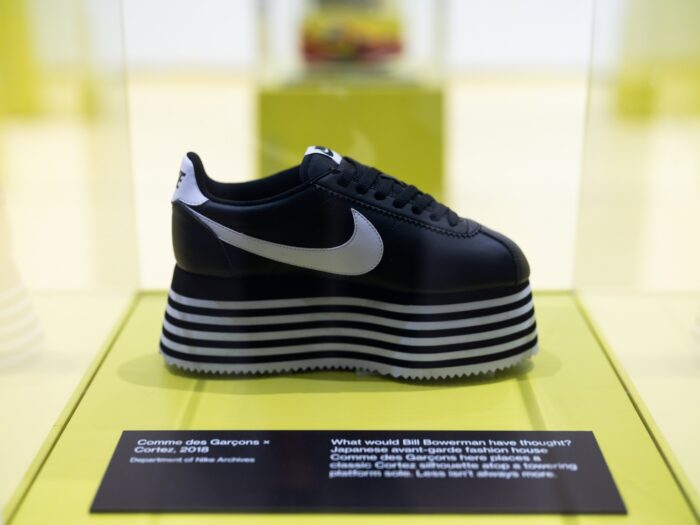
When did the sneaker become this valuable? Its design history offers some answers.
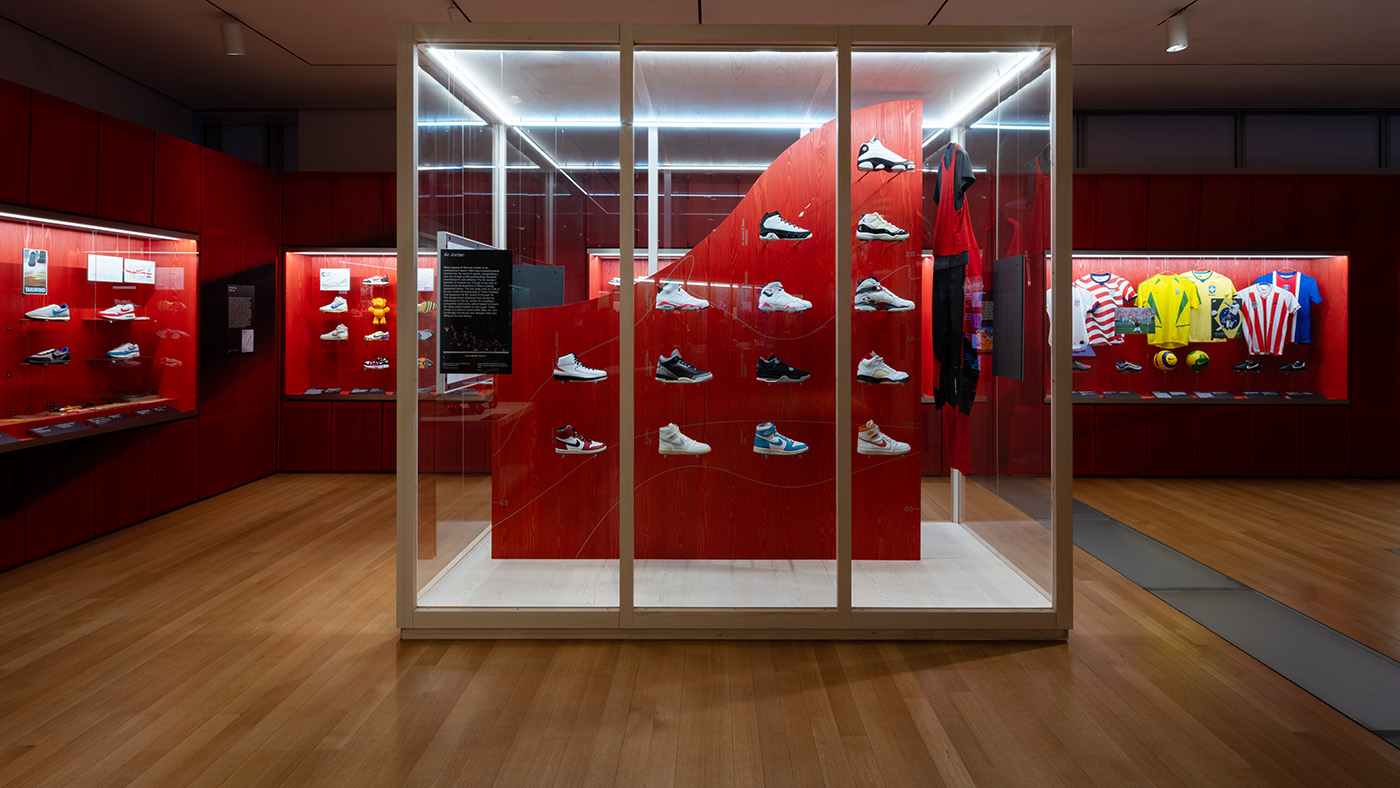
The U.S. premiere of Nike: Form Follows Motion opened at New York’s Museum of Arts and Design this past week and runs through March 7. The exhibition, originated by Germany’s Vitra Design Museum, traces more than five decades of Nike design and is the first comprehensive museum display devoted to the brand.
There’s something wonderfully odd about an athletic shoe in a museum; although, perhaps not odder than changing your stride to protect one.
We put them on the floor. We sweat in them. We wear down their soles and dirty their laces. They cushion, grip, stabilize, flex and protect. They are made to work. “Form follows function” has been repeated in design circles for more than a century. The exhibit gives the idea a turn: Form Follows Motion.
Whether my middle school students realized it or not, movement had shaped their sneakers from the beginning.
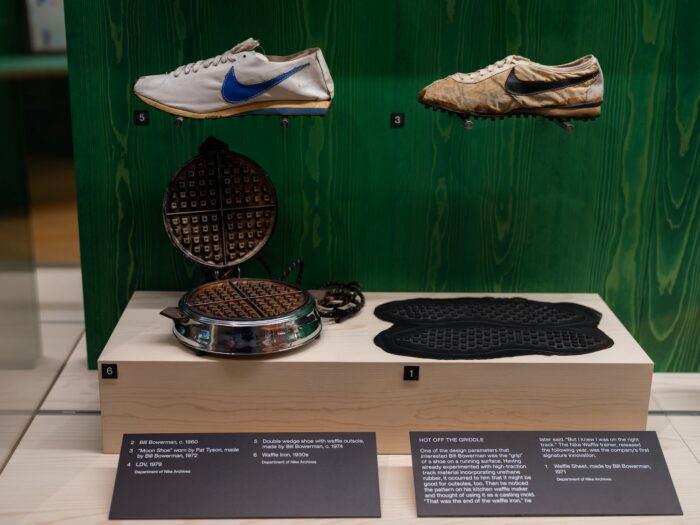
The now-famous story of Nike’s waffle sole begins with the company’s co-founder. Bill Bowerman. He experimented with a waffle iron, searching for a sole that could grip a running surface without traditional metal spikes. As a track coach, Bowerman was invested in improving runners’ performance. The resulting pattern became part of the early Nike Waffle Trainer.
It wasn’t created to become iconic. It was created to solve a problem. But technical innovation became visual identity, and a solution developed for the athlete became something the rest of us wanted to wear.
It didn’t stop with the Waffle Trainer. Consider Air.
Nike began using air cushioning in its shoes in the late 1970s. At first, the technology remained hidden inside the sole. But with the Air Max 1 in 1987, designer Tinker Hatfield exposed the cushioning through a visible window, and engineering became aesthetic. Performance became visible. The athletic shoe became more than athletic equipment.
As sneakers moved from the court and the track into music, fashion and street culture, they carried new meanings and eventually became objects we didn’t want to wear out at all. Which brings me back to those middle-school hallways.
The impulse to protect the sneaker has become enough of a cultural practice that the Museum of Arts and Design isn’t limiting its exploration to objects behind glass. On Sept. 23, the museum is hosting From Cooked to Sneakky Klean: Reviving Your Favorite Kicks, a hands-on workshop devoted to sneaker construction, cleaning and restoration. Participants are invited to bring in their worn shoes and learn how to revive them.
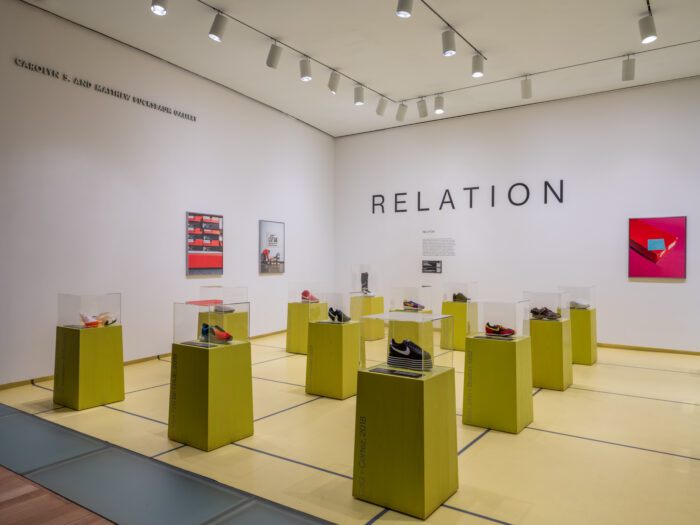
We have taken an object originally designed to pound against pavement and created rituals for keeping it pristine—and museums know something about preserving objects. Apparently, sneaker owners do too.
A painting doesn’t have to support your heel. A sculpture doesn’t have to survive a rainy walk to school.
A sneaker does.
And yet we can want the shoe for more than what it does. We can want it for what it looks like, what it represents or what owning it says about us.
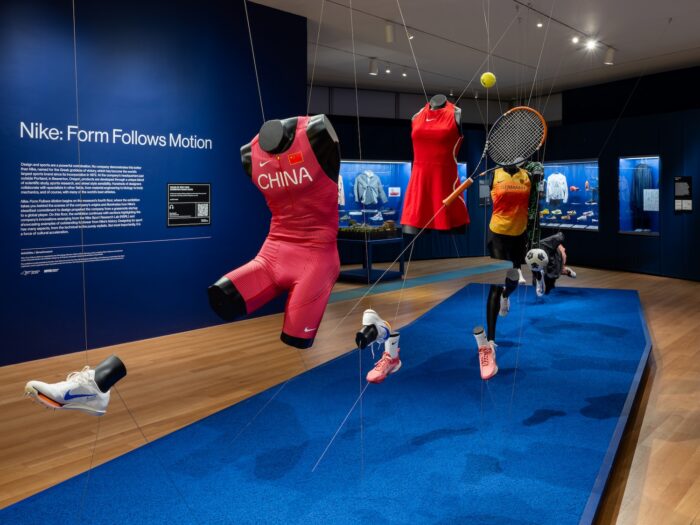
The exhibition asks us to consider how an object built for ordinary use became worthy of this much attention. There is design beneath every step: choices about material and structure but also about what should be visible, what should be beautiful and what an object should make us feel.
More than 50 years after Bowerman experimented with a waffle iron, I think about those middle-school students moving cautiously down the hallway, protecting the clean lines of the shoes on their feet. They were made to move; my students thought they were worth preserving. Somewhere between those two ideas, an everyday object became an icon.