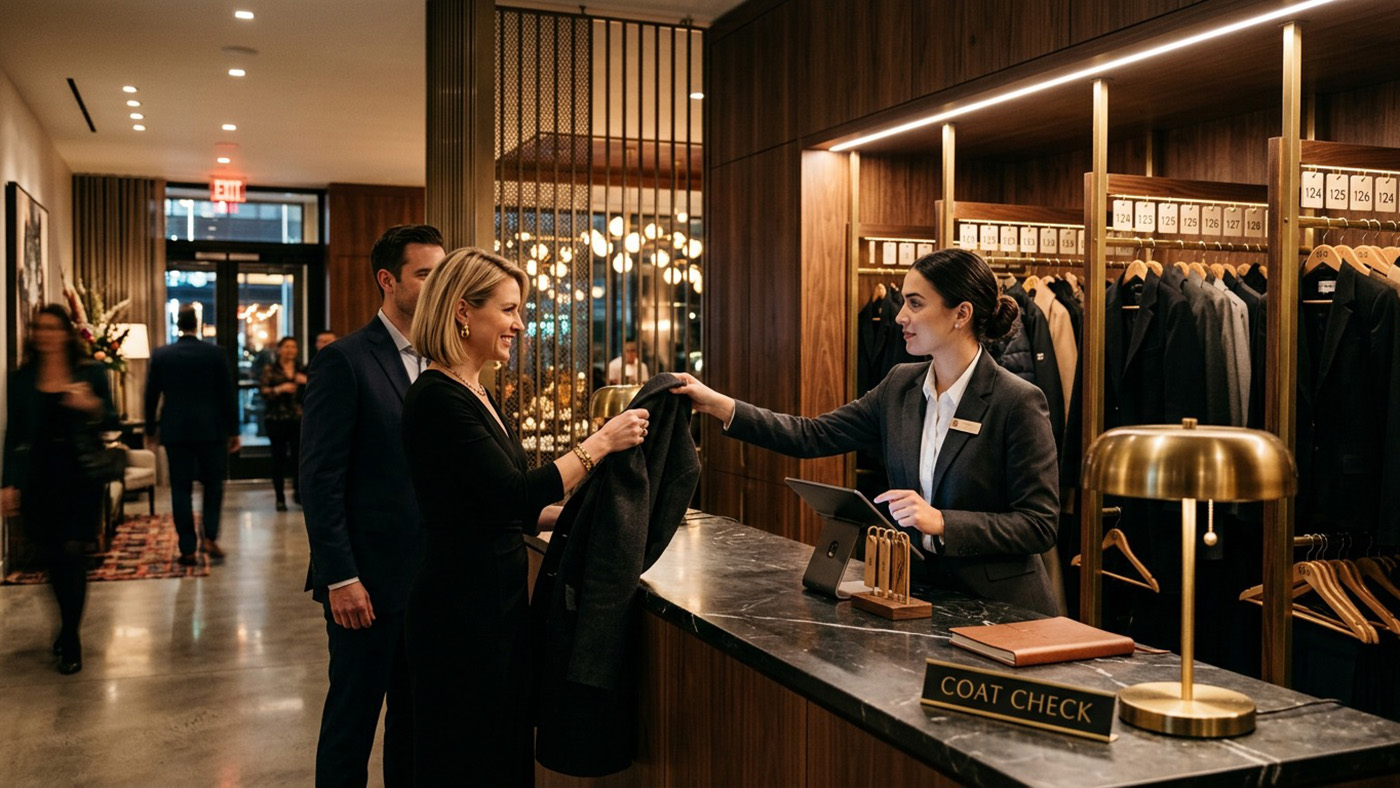
It was 1904 when Harry Susskind glanced through the window of Captain Jim Churchill’s crowded New York restaurant and observed coats occupying chairs that could have held paying customers. Though coat checks weren’t new, the scene inspired a business idea for Susskind. He offered to install and staff the coat check himself, paying Churchill for the privilege.
The arrangement worked. Within little more than a decade, Susskind and his brother were operating cloakrooms in 60 restaurants.
More than a century later, some argue the economics of that space have almost reversed. “Rent is exorbitant and a dedicated coat-check room can feel unnecessary,” said Kate Edwards, hospitality consultant and founder of Kate Edwards & Co., a boutique marketing firm that specializes in helping businesses succeed.
Labor has become a pain point too. “The main reason for the dwindling coat checks in restaurants is that this used to be a tip-only position, and now it is a seasonal employment situation,” she added. “Essentially, what used to be low cost is now higher cost for the restaurant.”
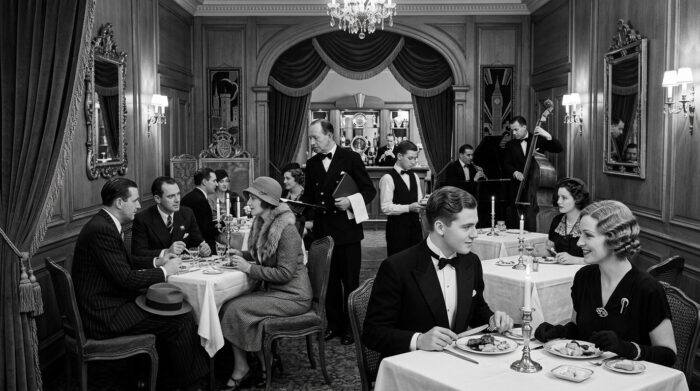
Then there’s the cultural differences from yesteryear. “Restaurants have become far more casual and democratic where dining out is less of an occasion and much more part of everyday life,” said Tony Matters, head of design, food and beverage at Faber and Co. hospitality design agency. “Inevitably, many of the rituals associated with more formal dining have fallen away with that.”
Today, we dress differently. We dine out more casually. And we’re less inclined to surrender our belongings at the door—and even less inclined to wait for them when we’re ready to leave.
Somewhere along the way, the coat check went from part of the choreography of dining out to something many restaurants decided they could do without. But did we simply shed an outdated formality, or have we lost one of the small gestures that made going out feel like an occasion?
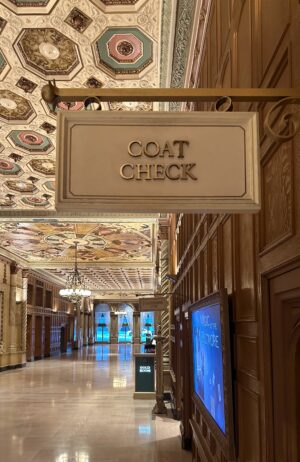
More Than Holding Coats
For Edwards, the appeal was never just practical. “Coat check is a wonderful extension of hospitality, and it messages, ‘Let’s take care of this for you,’ to the guests,” she said. “It’s an extension of hello and goodbye, which can be thoughtful additions to the first and last impression.”
Matters believes much more than a coat is exchanged during this transaction. “There’s also an element of trust,” he added. “You’re handing over something personal in the expectation that it will be looked after and returned to you later. It creates a tiny emotional exchange before you’ve even sat down.”
In a way, this transaction also helps frame the experience, making it about much more than the coat. “I think rituals matter,” he continued. “They create punctuation within an experience. Taking a coat marks the transition from the street into the restaurant; returning it marks the end of the evening. Those moments help turn eating out from a transaction into an occasion.”
Earning Its Keep
Of course, not every restaurant needs a cloakroom. A neighborhood spot built around a quick, casual meal may gain little from adding another stop between the door and the table.
“To me, this is something that must align with the brand,” Edwards said. “Casual concepts don’t need this, and it can also slow down service and table turns.”
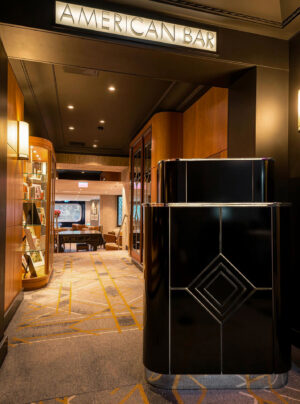
Make no mistake, however, that in the right setting, there is a tangible, functional benefit to this service. Coats, bags and umbrellas disappear from the dining room instead of ending up draped over chairs, wedged under tables or in the path of servers.
As with all things in life, there is a time and a place for the coat check. Price point, climate, dwell time, available space and guest expectations all help determine whether this service will add something to the experience—or simply add another task diners must complete.
“The best examples of coat checks don’t feel like an added service; they’re simply part of the arrival sequence,” Matters said. “If a guest has to search for the cloakroom, queue or wait 10 minutes to retrieve a coat, the ritual has defeated its purpose.”
Some operators are finding ways to preserve the gesture without retaining the traditional coatroom. Faber recently incorporated a cloak cupboard directly into the arrival area at the American Bar at the Savoy in London. The bar had been sending guests elsewhere in the hotel to check their coats, which proved disruptive.
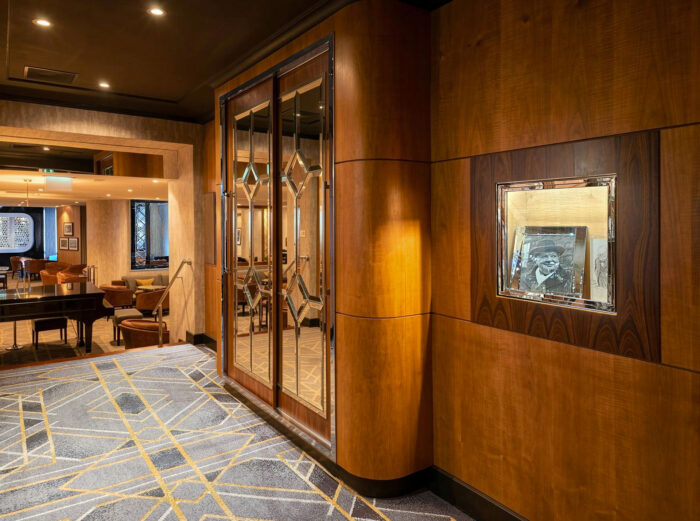
That solution hints at what may be the coat check’s modern sweet spot: not formality for formality’s sake, but a service that makes sense for the concept. One that actually makes the guest’s experience easier. Better.
After years of restaurants shedding many of these rituals, Matters is starting to see some return. This includes not only the coat check but also dessert trolleys and tableside preparation.