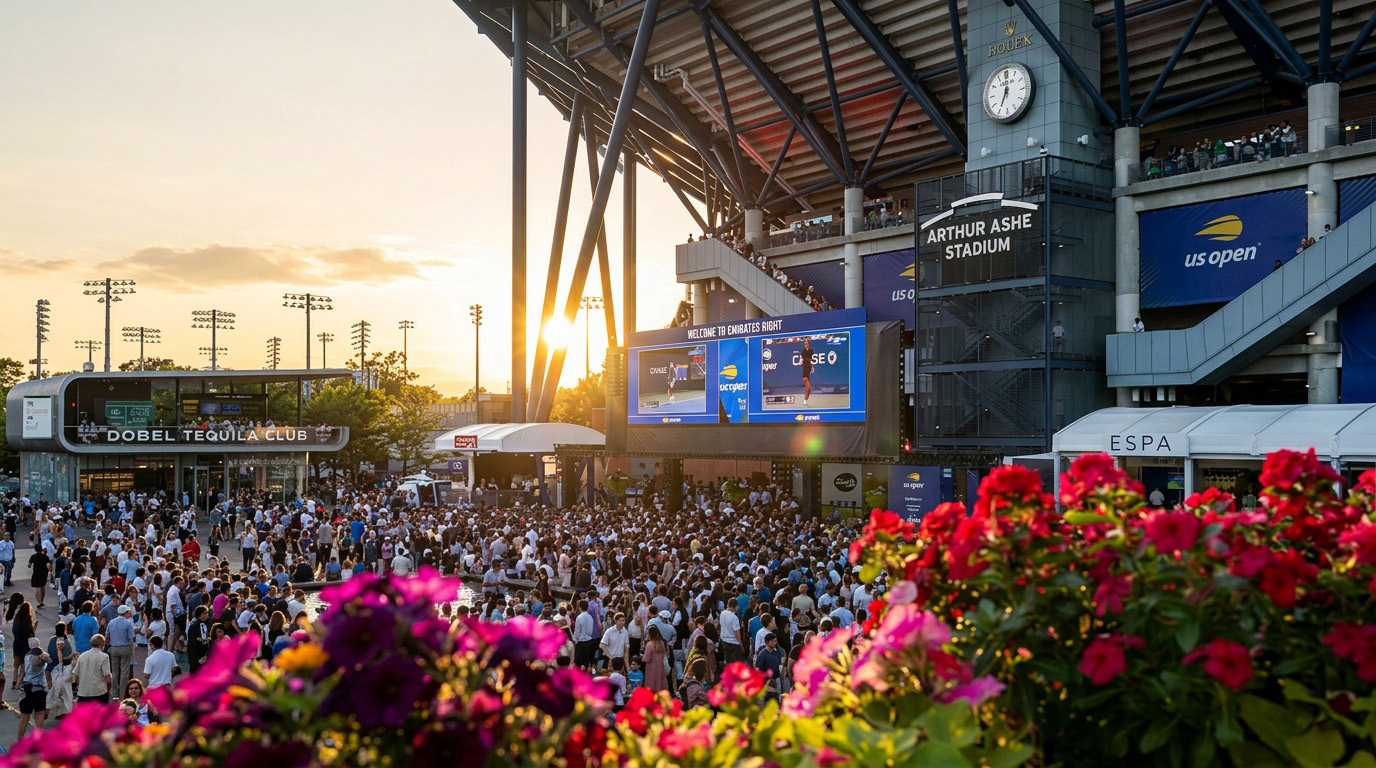
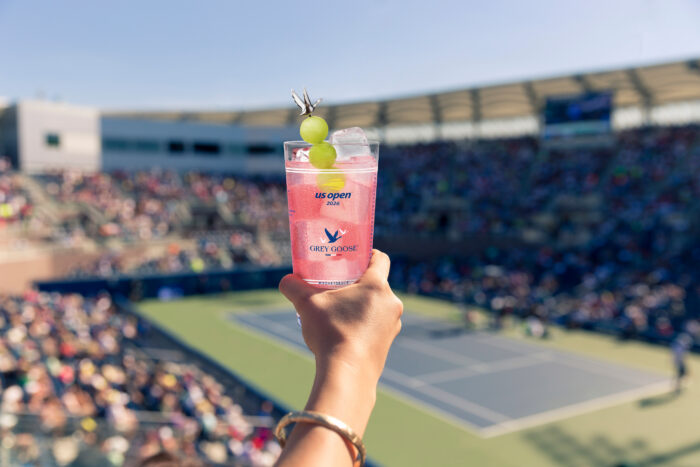
Tonight, somewhere above Arthur Ashe Stadium in Flushing, New York, a woman in Loro Piana will pay $23 for a plastic cup of Grey Goose, lemonade, raspberry liqueur and three honeydew balls arranged as though they’re an amuse-bouche.
She will not know she’s sitting on 50 million cubic yards of Brooklyn’s household ash.
As in literal ash.
Between 1910 and 1934 (roughly), Brooklyn shipped its coal-furnace waste out to a marshy stretch of Queens, where it accumulated in enormous mounds.
One of them, nicknamed Mount Corona, rose nearly 90 feet. F. Scott Fitzgerald rode past the place on the train and turned it into The Great Gatsby’s valley of ashes, “a fantastic farm where ashes grow like wheat into ridges and hills.”
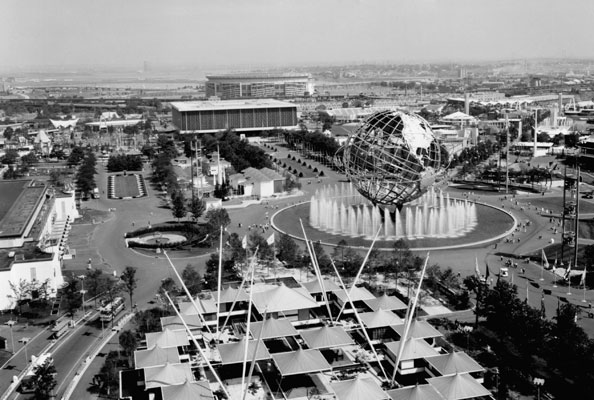
Robert Moses, an urban planner and city official, later bulldozed it for the 1939 World’s Fair; four decades after that, the United States Tennis Association built a tennis center on top of the site.
So every year, several thousand of America’s most well-heeled gather in their designer labels to watch tennis matches on land that’s literary claim to fame is being the bleakest, most class-anxious wasteland—not worthy of even a tote bag slogan—in the history of American fiction.
The tournament itself began a bit more refined when it debuted at the Newport Casino in Newport, Rhode Island in 1881; it was a men-only amateur affair that looked more like a garden party with rackets.
Newport remained its home until 1915 when a group of New Yorkers, reportedly tired of the city’s snobbery, were looking for room to draw a larger crowd. They moved the tournament to The West Side Tennis Club in Forest Hills, New York.
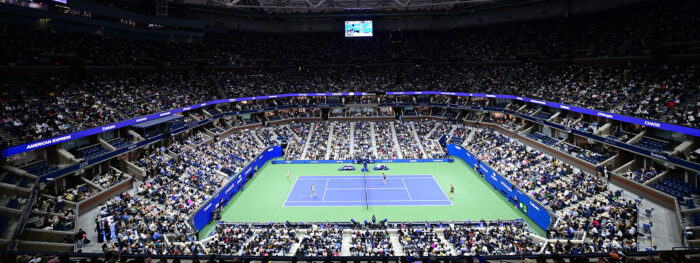
It continued on grass there until 1974, followed by a brief and somewhat regrettable three-year experiment with clay before the tournament moved to Flushing Meadows and hard courts in 1978, where it has remained ever since.
Quite possibly the best character in the tournament’s history, though, never won a match. James Henry Van Alen II was a Newport blue blood, an Astor family relation and the owner of a house with suits of armor in the foyer and a Rolls in the driveway.
He made his only U.S. Championships appearance in 1931, lost in straight sets, and then spent much of the next four decades trying to get even.
As president of the Newport Casino, Van Alen had watched enough marathon sets drag on for hours to decide the scoring system needed fixing. His solution was sudden death: nine points, first to five, with none of the endless advantage scoring that could keep a match going for an extensive period of time.
He called it sudden death on purpose, and the press ate it up. They nicknamed him the “Newport Bolshevik,” a title that requires both a coat of arms and a taste for revolution, which Van Alen apparently possessed in equal measure. Traditionalists hated the idea.
The U.S. Open tried a version of it anyway in 1970, becoming the first major professional tennis tournament to use a tiebreak, and television networks—which had been developing their own objections to five-hour matches—were grateful.
It wouldn’t be the last time the Open got somewhere before the rest of tennis. Equal prize money for men and women came in 1973, nearly three decades before any other major.
The Australian Open didn’t follow until 2001, and the French Open and Wimbledon trailed even further behind. The change came about thanks in large part to Billie Jean King’s refusal to let the subject drop.
Night matches arrived in 1975. Electronic line-calling came in 2006, beginning the slow extinction of that ancient tennis ritual: men in headbands screaming at line judges.
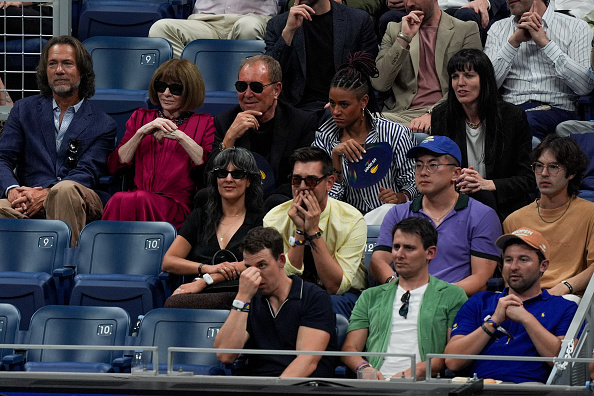
And somewhere underneath all of it, the ash remains. You wouldn’t know it from Arthur Ashe Stadium, of course, where Anna Wintour, Michael Kors, Bowen Yang, and Ariana DeBose have all turned up this year—and where the old dumping ground now comes with luxury suites, Rolex clocks and $23 cocktails.
Fitzgerald looked at this ground a century ago and imagined a place where nothing beautiful was supposed to grow. Now, for two weeks every summer, it hosts one of the most expensive spectacles in sports.
The 2026 U.S. Open wraps up on Sunday, Sept. 13.