
Why Pets Become More Meaningful in Midlife
There’s a strange emotional contradiction that happens in midlife that nobody really prepares you for.
For years your life runs on schedules that barely belong to you. School pickups, soccer practices, college applications, and family dinners dot multicolored-labeled calendars. Weekends somehow become busier than weekdays. For 20 years or more, your identity is deeply tied to caring for other people. Then one day, often more gradually than dramatically, the house gets quieter.
For many Gen Xers and Boomers, there’s relief in that shift. They finally have flexibility again. They have freedom to travel, reclaim hobbies, sleep in on weekends, or simply enjoy a life no longer governed by carpools and calendars. But there can also be something unexpected underneath it: a kind of emotional stillness.
Cue the Caregiving Paradox
While younger generations may be postponing children entirely, Gen X and Boomers already lived through parenthood. They already experienced decades of building routines around caring for someone else. And now, at a moment when fewer are becoming grandparents, many are discovering they still miss having someone to nurture. They become nostalgic for the caregiving duties they used to complain about.
This is the caregiving paradox.
That’s where pets quietly enter the picture. Not necessarily as replacements for children but as companions who help create a second act to caregiving.

An Extraordinary Life Beyond the Empty Nest
What used to be “the family dog” or “the family cat” often becomes something entirely different. Years ago pets fit into the chaos of a busy household where attention was divided among careers, kids, activities and endless obligations. Now the relationship shifts. The dog or cat becomes their companion.
And with fewer competing demands, people suddenly have more room for that relationship.
More time for long walks. More patience for routines. More resources for the things that once felt excessive, like orthopedic beds, fresh food subscriptions, pet-friendly vacations, birthday celebrations or dining on patios where the dog gets its own water bowl before you get your menu. Many of these pets are living extraordinary lives.
A Different Kind of Pet Parenthood
Pets serve a role that goes far beyond companionship. When children leave home, many parents find themselves asking questions they haven’t had time to ask in decades: What do I want now? Who am I outside of raising a family? What does this next chapter actually look like? That transition can feel quite disorienting.
Pets create structure during that uncertainty. A pet waiting by the door every morning still needs a walk or a bowl of food. A cat curled nearby while you drink coffee still creates routine. Pets become anchors during a season of life that can feel both liberating and unfamiliar.
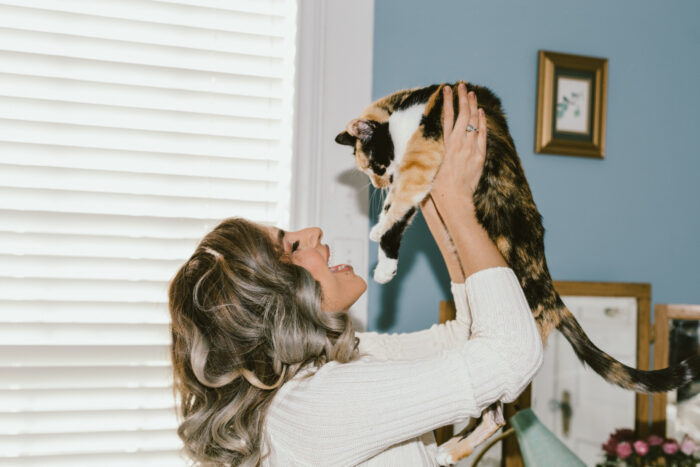
Research from Harvard Health Publishing has highlighted the emotional benefits pets can bring to adults, including companionship, routine and stress reduction. For many people entering this stage of life, caring for a pet brings warmth, comfort, and even a renewed sense of purpose to everyday routines.
Mutually-Assured Companionship in the Second Act
From the pet’s perspective, it’s not exactly a bad arrangement either.
Gone are the days of toddlers pulling tails or households filled with constant chaos. Many pets seem perfectly content becoming the center of attention in a quieter home. They settle into routines, join road trips, tag along to outdoor restaurants, run errands, and spend long stretches simply existing beside their people.
There’s comfort in that rhythm for both sides.
Because in this second chapter, pets become more than companions. They become stabilizers. They fill homes with routine, affection, and a sense of presence during a period of life that often feels quieter than expected.
The quiet is coming either way.
Pets just make it feel a little less empty.