
CEO John Ternus Builds on Legacy of Steve Jobs While Embracing AI
The new iPhones are everything many of us aspire to be. Younger, thinner and more intelligent—artificially or otherwise.
Ultimately, we all just want to be loved. And a decade or two ago, it was impossible to avoid news reports about crowds clamoring for the latest iPhone outside Apple Stores, the ultimate object of desire in a world increasingly dominated by technology.
Those competitive moments were equal parts sport and commerce, testing the limits of endurance and luck. The game plan was simple: Set up a lawn chair, camp out overnight, hope there’s an iPhone left by the time you get in, buy it—no matter the cost—and emerge triumphantly with the signature Apple bag as your trophy. Then return a year later to do it all over again when yet another iPhone is released.
Funny enough, Apple played a role in toning down its own excitement factor, shifting focus to a preorder model while customers learned they could hold onto iPhones for longer periods of time.
The profits kept rolling in, but Apple is looking to reclaim its critical corner of the zeitgeist with new technology, artificial intelligence and a CEO who understands the power of high-profile product rollouts.
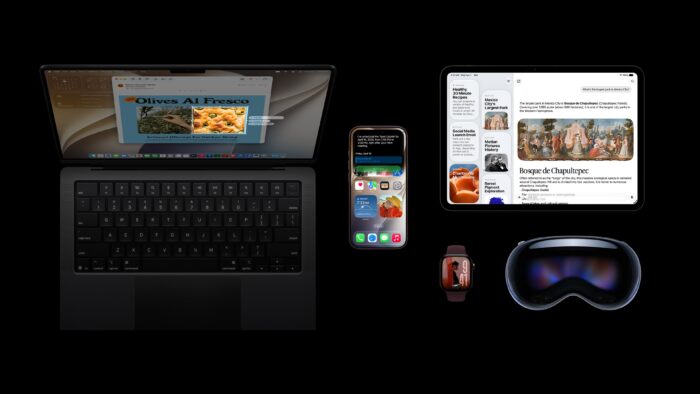
“You look across our whole portfolio, and the beauty of Apple is its hardware, software, services,” CEO John Ternus said during a joint interview with Tom’s Guide and TechRadar. “What I love is when all of these things come together, interact and create an experience that is bigger than the sum of its parts.”
Ternus’ tenure as chief executive officer of Apple began on Sept. 1, just eight days before a product announcement that set the stage for a new era of the company. The biggest surprise during the event came when Ternus resurrected three words closely associated with Steve Jobs’ legendary reveals: “Actually, there is one more thing … .”
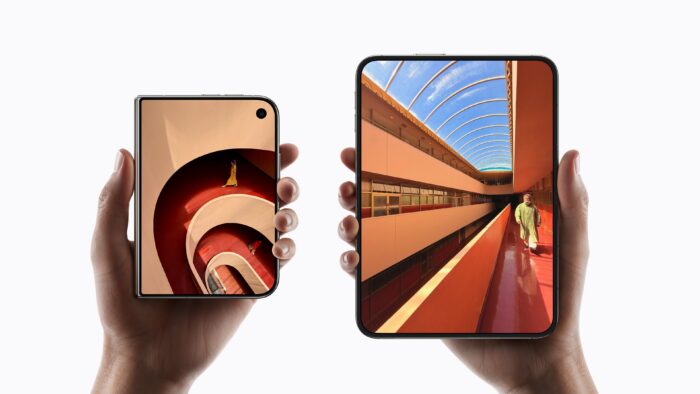
He was referring to the iPhone Duo, Apple’s first-ever foldable phone, which opens to a 7.6-inch inner display with a 5.4-inch outer display. When unfolded, it’s the thinnest iPhone in history. Preorders begin Oct. 16, with the $1,999 phone going on sale Oct. 23.
Foldable phones are nothing new. Competitors have sold them for more than a decade. But Apple took its time to get the concept right; and much like the iPad, which helped kick off the tablet boom in 2010, the company is betting on the Duo to set a trend and not merely follow one.
Instead of having essentially two phones awkwardly stuck together in a bulky, inefficient product, Apple’s team of engineers created something new: A phone that opens up to a screen with a boxy but attractive 1.42:1 aspect ratio that’s nearly the same as the one for a standard IMAX film. The two sides can also remain partially folded at different angles, allowing the device to effectively support itself.
“It meets our bar for quality and durability but also for design,” Ternus said, noting the Duo’s usability and a glasslike polymer nanotexture on each side of the OLED. “It’s beautifully flat. It’s amazing to touch.”
In something of a surprise—and a nod to continued evolution—the Duo works with an Apple Pencil. When Steve Jobs introduced the original iPhone back in 2007 without such an option, he famously asked, “Who wants a stylus?” Nearly two decades later, Apple answers by proving that nothing is off the table.

Up first, however, is the iPhone 18 Pro and Pro Max, which go on sale Sept. 18 with preorders now available. While looking and feeling more like a traditional iPhone, the redesigns offer a substantial 48-megapixel camera upgrade, dramatic battery improvements and a new A20 Pro chip.
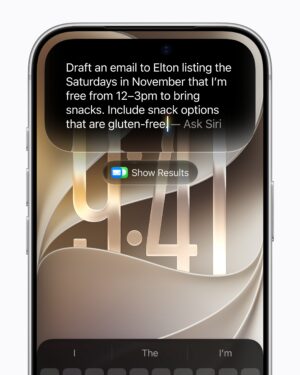
Those hardware announcements are dominating the headlines, but the biggest game changer in Apple’s recent product announcement could be the long-awaited arrival of Siri AI, which signals the company’s intention to present artificial intelligence as a systemwide layer and not merely an iPhone feature.
While Siri was originally built to follow commands, the new version was designed to understand context. Users can pull up a song that a co-worker recommended in a text or the arrival time of a loved one’s flight without knowing the airline or flight number.
Siri AI works beyond the iPhone, extending its capabilities to other devices, including a new line of AirPods that allows users to hear foreign languages translated in real time and respond to Siri by nodding or shaking their heads.
It’s a promising start for the John Ternus era, although these products were in development long before the new CEO took charge. Still, putting a former hardware engineer in charge says something about Apple’s renewed emphasis on buzzworthy products, even as artificial intelligence increasingly connects the ecosystem around them.
It’s enough to make you rush out and test-drive a new iPhone—whether or not you’d sleep on the sidewalk to buy one.