Some ban cellphones, some serve ramen, but all command your attention when the needle drops.
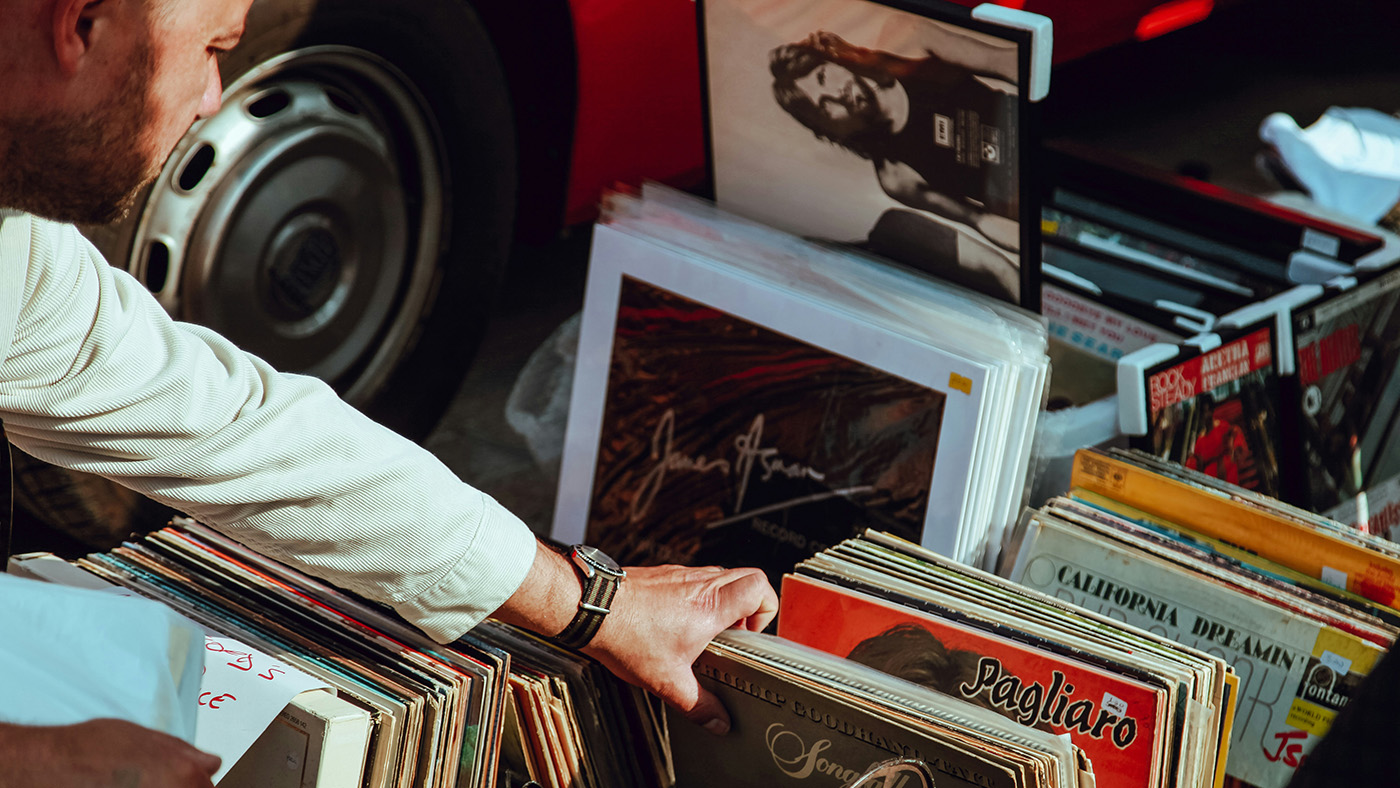
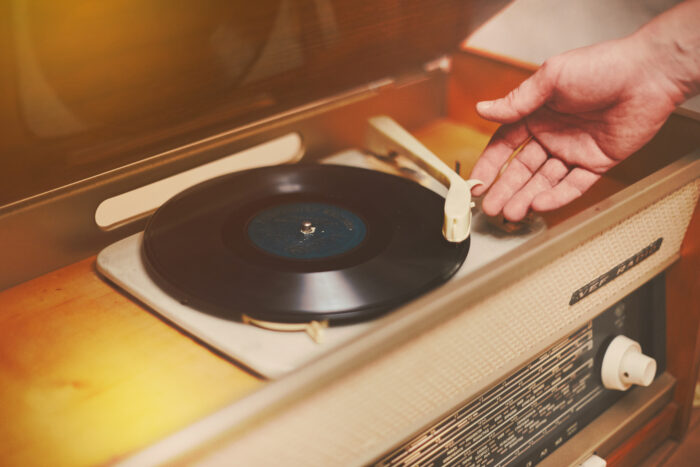
Some of us call them records. Collectors tend to say vinyl. For those who understood music before the compact disc, digital MP3 files and online streaming, there was a certain magic to buying an album from the local store, carefully peeling off the packaging and breathing in that smell before lining up the center hole with the spindle and laying the black circle flat on the turntable.
The crackle of dust and static when the needle drops is like a tenor clearing his throat or the delicate tap of a conductor’s baton signaling to the audience that the show is about to begin.
This might be a scene from your childhood or inside Eagle jazz cafe, a vinyl listening room in Tokyo founded in 1967 by jazz critic Masahiro Goto. To this day, the lounge operates with a clear understanding that music deserves your complete attention, even when it’s not performed live.
Follow the rules: No conversation before 6 p.m., limit your cellphone use and please, no requests. Records are selected by Goto—not by customers—and played loudly through vintage JBL studio monitors in a room designed specifically for listening.
Eagle reflects the raw appeal of jazz kissa rooms that emerged after World War II in Japan, when the country was occupied by the United States. As pop culture shifted and the popularity of records peaked, fell and stubbornly rose again among retail customers, vinyl listening rooms quietly remained a staple of Japanese culture. Today the concept has caught on in different markets throughout the world, including Spiritland in London and Public Records in Brooklyn.
“Most of the time now, music is just background, a playlist on shuffle while you’re doing five other things,” said Brian Kline, head of House of Blues and Brooklyn Bowl in Las Vegas. “A listening room treats a record like it’s worth your full attention.”
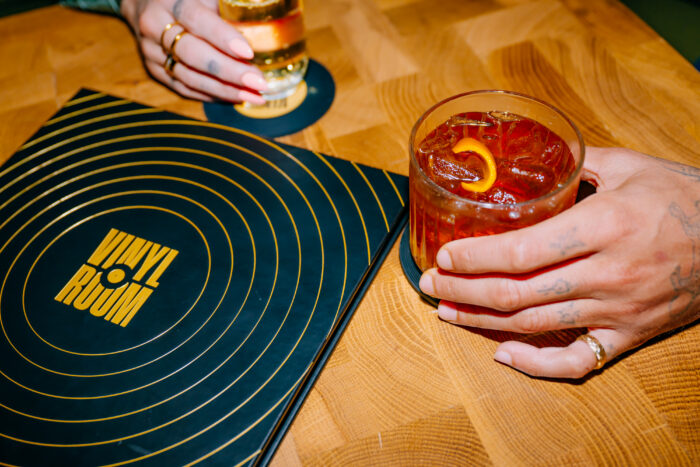
Kline recently celebrated the opening of a new project in Las Vegas: Vinyl Room atop the Mandalay Bay Resort and Casino. It follows another version of the same name located inside the Hollywood Palladium in Los Angeles. Both represent an evolution of the concept, spinning records in bigger, brighter and more social environments.
“Inspiration comes from 1970s Japanese hi-fi listening rooms, where everything went into the sound system, and people came to sit and really listen,” Kline added. “Those rooms were built for quiet, focused listening. We’ve opened that up into something more social—where you’re with friends, eating and drinking and talking, but the music is still the centerpiece.”
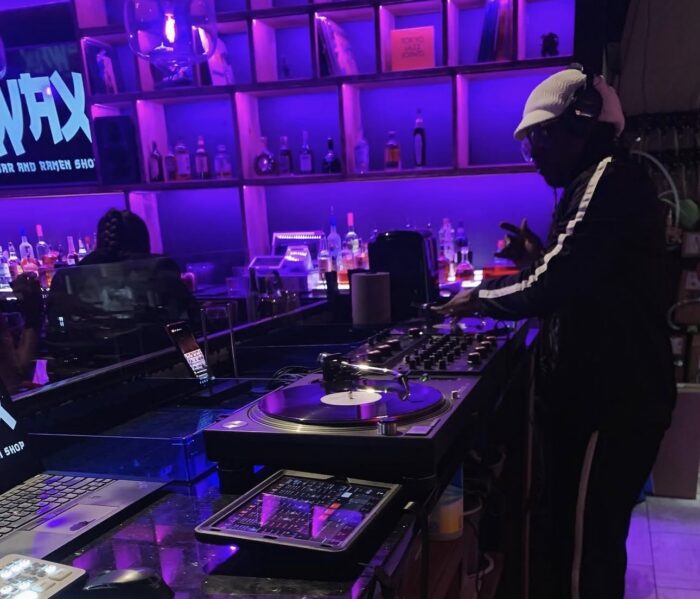
Wax Vinyl Bar in Chicago’s West Town neighborhood offers another take on the concept with a looser but still important set of guidelines. “Just be nice to the staff, bring good vibes and don’t make requests—that’s a big rule,” co-owner Gina Barge-Farmer said, explaining there’s less flexibility for vinyl DJs to play something unexpected. “Electronic music is a little easier, because even if the DJ doesn’t have a song in his or her repertoire, they can download it on the spot. With vinyl, you can only play what you brought.”
Wax Vinyl Bar loves theme nights, dedicated to the likes of Stevie Wonder and Sade, but tips its hat to Japan with not only a fun, flavorful ramen menu, but a spirit that honors jazz kissa culture. Barge-Farmer and her husband, DJ Lee Farmer, even traveled to Tokyo to gather intel on listening rooms before opening their own.
“We went to one called Bar Martha, which was hilarious because you can’t really talk in there,” she recalled. “They’re very specific about the way you operate. The Japanese in general are dedicated to rigor and excellence. They were like, ‘Sit down. Be very quiet. Don’t talk.’ I said, ‘Oh my God, I have to leave’ because I’m gonna start laughing at an inappropriate moment.”
Dante’s HiFi+ in Miami doesn’t bother with such strict rules, even when giving audiophiles what co-owner Rich Medina calls a “true stereo listening experience.” The goal isn’t simply volume or clarity; it’s to experience the physical qualities of analog sound that often disappear through digital compression—a process that flattens sound waves for less-demanding cellphone speakers. The room builds on jazz kissa traditions while hosting rotating residencies that span gospel, house, disco, R&B and Brazilian Tropicalia.
“Music can be presented in a lot of different ways,” according to Medina, who’s also the club’s music director and a DJ of nearly 40 years. “You just have to open your head up and let the people who practice it show you what they got.”
Medina believes his business is at the center of a generational cycle with vinyl as the common element. “There are young people who are coming into knowledge about records that are way older than they are,” he said. “And it’s healthy for the culture. I used to be that kid. When I was 20, 21, 22, I was discovering everything.”
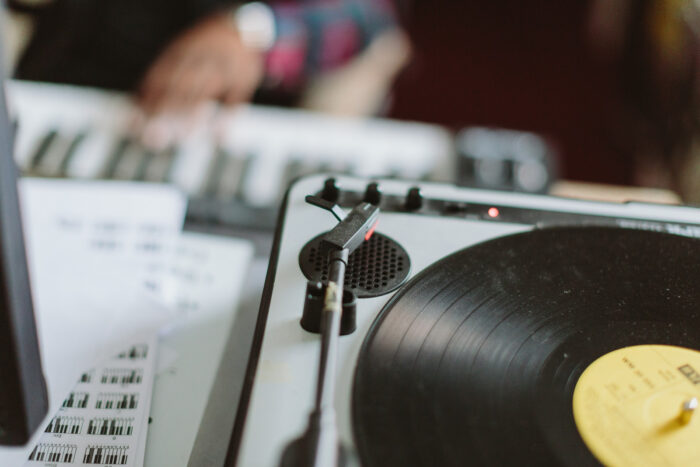
Nostalgia may help explain the appeal, but it doesn’t fully account for why listening rooms are finding new audiences. Kline thinks the format itself demands something increasingly rare. “Vinyl asks something of you,” he said. “You pick the record, you drop the needle, you listen to the whole thing in order.”
For him, the experience begins even before the first note. “I think it starts with the intent,” he continued. “Coming to a place like ours, you have the intent to understand or to experience or reexperience what it sounds like to listen to records on a high-fidelity sound system.”
The goal, he added, is for listeners to “pay attention and absorb the frequencies and vibrations that you’re not gonna get listening to something in your earbuds.”
The technology may be old, but in an age when everything competes for our attention, the idea of sitting down and actually listening to music suddenly feels new again.