Western Sicily Continues Ancient Tradition of Harvesting Mineral Commodity
The sun begins to soften, throwing long ribbons of light across shallow basins of seawater in western Sicily. From Marsala to neighboring Trapani, each vast rectangular salt pan turns into a mirror of sky and sun. They create a mosaic of shimmering reflections, only to be broken by conical piles of salt. The salt crunches under my boots. The air tastes unmistakably of the sea, and the ground beneath feels ancient.
Salt has always fascinated me. As a child, I would experiment with a salt shaker, coaxing it to balance on just a few grains at a 45-degree angle. Watching its crystals support the glass felt like the salt was more than a seasoning; it was tiny, geometric and unexpectedly powerful. That curiosity came back in Marsala, where I found myself surrounded by glittering crystals, as my early wonder multiplied in the Sicilian sun.
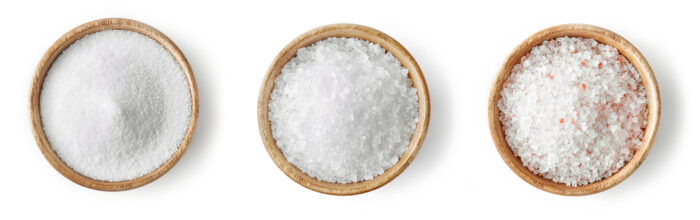
Salt has shaped civilizations for millennia—its influence runs through history like a shining thread. The mineral fueled ancient trade, fed armies and even left its mark on language. Our modern word salary comes from the Roman word salarium, a payment once made in salt. And the phrase “worth your salt” harkens back to the days when the mineral was a currency of survival.
Empires rose, and fortunes were made, from Venice’s Mediterranean monopoly. to the Saharan salt caravans and northern Europe’s preserved cod. Salt was much more than seasoning; it was commerce, power and survival. Its symbolism was woven into rituals from Japan to Europe.
Along the western Sicilian coast, the story of salt feels especially alive. At the salt pans at Mamma Caura, salinari, or salt workers,still harvest salt much as they have for generations, keeping old traditions alive.
For centuries, people in western Sicily have used shallow pans to make salt, following ancient traditions. The shallow waters of the Stagnone lagoon, along with steady winds and strong sun, make ideal conditions. Marsala salt became an important part of local trade and was shipped across Europe for many years.
Windmills appear on the horizon, symbols of Marsala’s history of labor and ingenuity. The Ettore and Infersa Saline Mill, carefully restored, still works today. The wooden gears, crafted by a Trapani shipwright, reflect Sicilian skill. Seeing the mill in motion, surrounded by salt pans, connects you to both the past and nature.
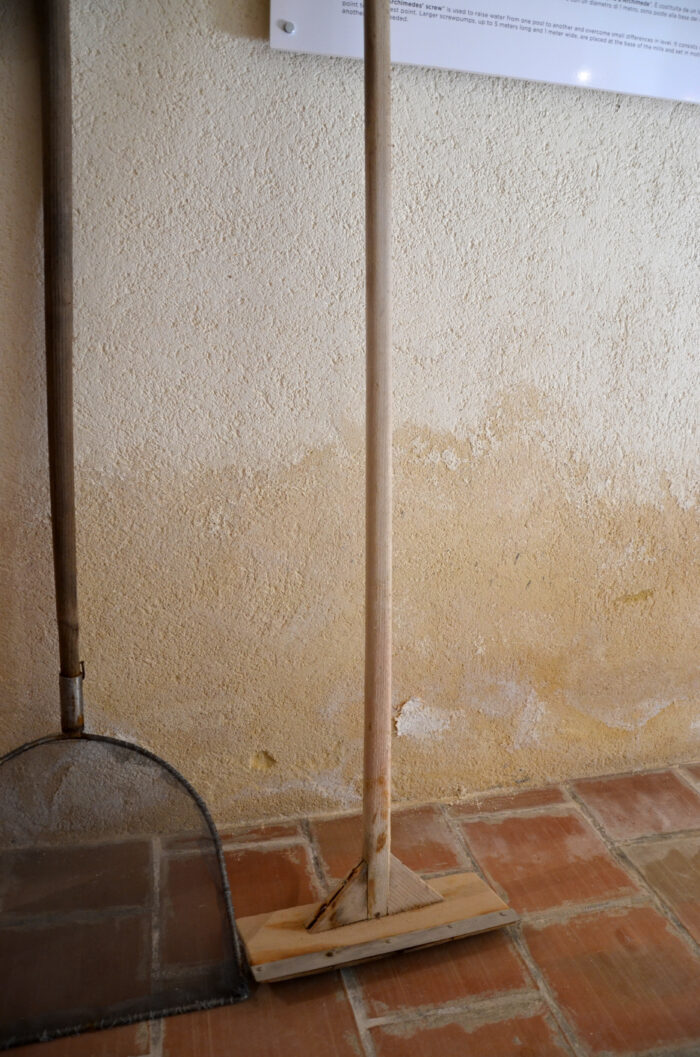
Workers use wide wooden rakes to sweep the salty water, collecting crystals into tidy white piles. Their movements are careful, shaped by generations of experience with wind, tide and sun. Salt forms slowly, and the work follows that natural pace.
“This salt is truly organic,” said a salt harvester. He’s talking about the evaporation of seawater, sun, wind and manual harvesting, with no additives or artificial interventions.
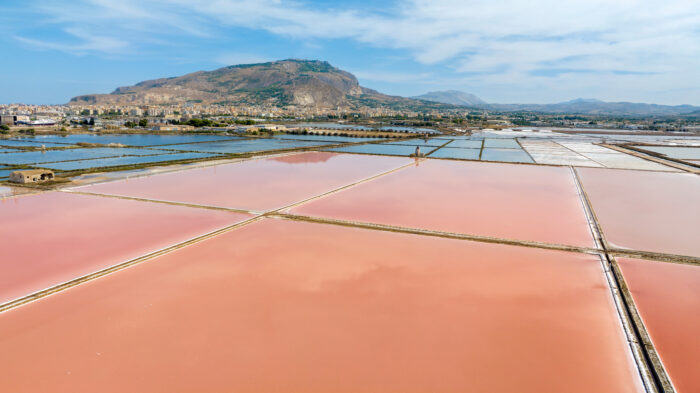
This is beautiful—and natural. And when you stand among the salt pans, you see how light, water, sun and crystals all come together, along with the work of people and nature. In this landscape, salt is not defined by price or rarity but rather as a meaningful commodity. Each pile of salt reflects traditions unchanged for centuries. Salt is woven into life and local pride.
As evening falls, the air cools, and a hard day’s work comes to an end. Around the world, salt is tossed onto food with little thought. A pinch, a habit, a finishing touch. But here along the shores of western Sicily, history feels close and luminous and never taken for granted.
As the last sunlight slips away, I kick off my boots and join friends at the little restaurant overlooking the horizon. A bottle of Sicilian Catarratto is shared, toasting the salinari, the sparkling pans, and the enduring wonder of salt.