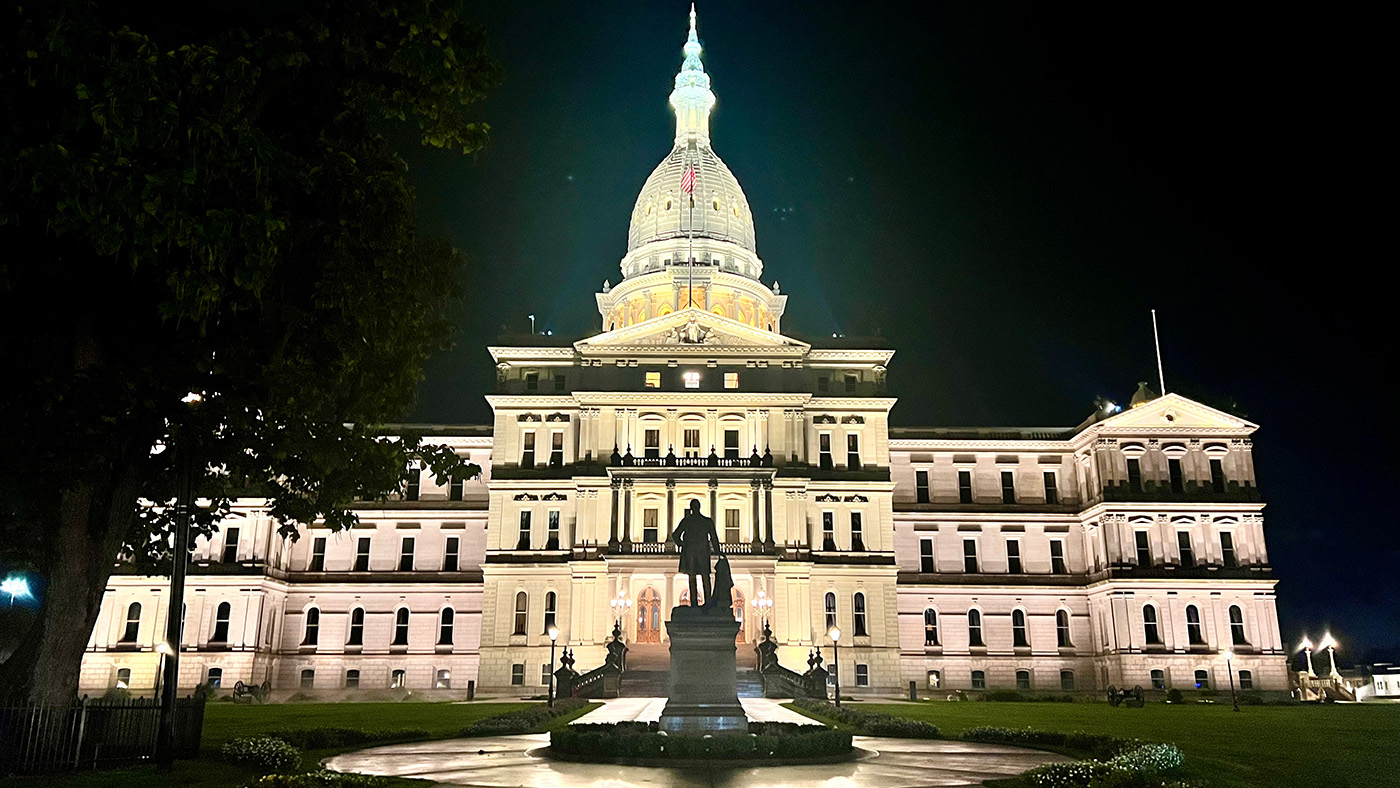
What a 28-year journey through all 50 state capitols reveals about architecture, ambition and the stories America chooses to preserve.
When I was in college, I embarked on an adventure to visit every state in the union. And not only was I determined to set foot within every state, I planned to quantify it by visiting every state capitol building. Many people visit New York City, but not many can say they’ve seen The Egg—Albany’s performing arts center—in the state’s capital city. And who else knows that Alaska boasts the only state seal with a seal on it?
This bucket list journey began in 1997, when my sister and I visited my grandparents who summered in Park City, Utah. It was my grandfather—a man who loved genealogy and history—who took us to the capital of the “Beehive State.” From the Utah granite on its exterior to the large, prominently featured bronze beehive sculptures on the legislative building’s Grand Staircase, I was hooked.

Not only did I want to learn more about each state in our nation, but I also had a desire to see how each capitol tells a story about its regional history and discover what is important to preserve and what it means to live the American dream. In celebration of the United States semiquincentennial this July, join me on a tour through the capitol buildings that I encountered on my journey.
50 Buildings, 50 Unique Stories
The first U.S. state capitol was designed in Williamsburg, Virginia, in 1705. During my years of crisscrossing the country, I learned that many states had either moved their capital cities to a new location or had a new legislative building constructed after fires or other destruction.
When I went to the “Land of Lincoln,” I was shocked to learn that the tallest nonskyscraper capitol in Springfield was, in fact, the sixth capitol in Illinois.
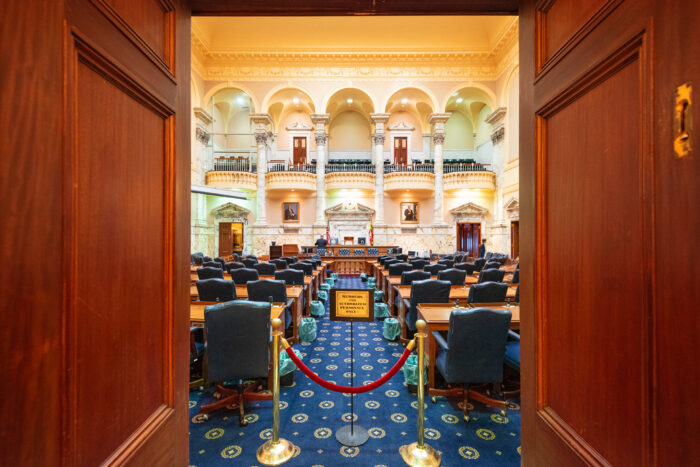
Annapolis boasts the oldest state house still in continuous legislative use, the Maryland State House (since 1772), and it is also the only state capitol that also served as the nation’s when it hosted the Continental Congress. Nestled in the highest point of the seaside city, the state house can be seen from the waters of “America’s Sailing Capitol.” The seafood in Annapolis was a very delicious memory from an afternoon spent walking the red-brick-lined sidewalks near the U.S. Naval Academy.
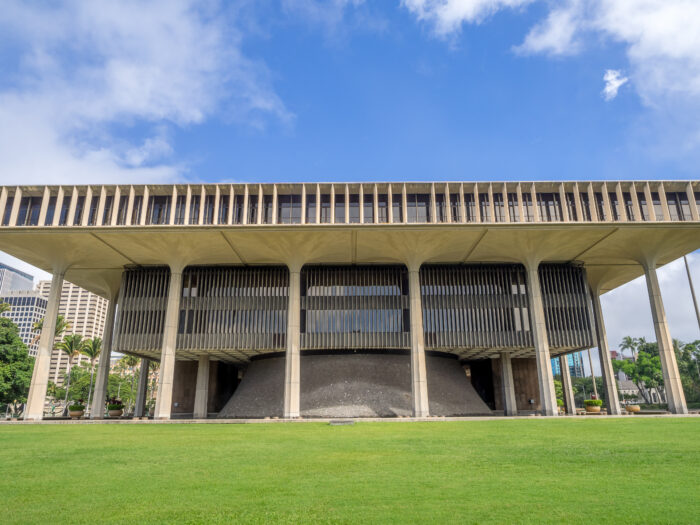
Hawaii’s state capitol boasts the only one with an open-air atrium, replacing the former: Iolani Palace, the residence of the royal family of the Kingdom of Hawaiʻi. The building’s design is a tribute to the state’s welcoming, aloha vibe; its eight columns represent the eight Hawaiian islands. I was also struck by an eight-foot-tall bronze statue of Queen Liliʻuokalani, Hawaiʻi’s last reigning monarch.
If one wants to dig into not only how the U.S. governs but also the stories each state tells, a visit to a capital city is the perfect way to learn and be inspired by the past.
Architecture and American Ambition
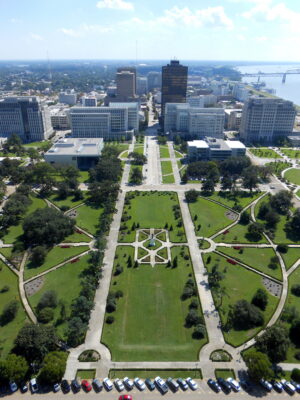
The tallest state house is in Louisiana. Rising above a well-manicured lawn, this Baton Rouge skyscraper is one of four of its kind in the country. Built during the Great Depression, it is a living example of Art Deco design and features an observation deck overlooking the Mississippi River. The local ABC affiliate reported that the building is constructed of more than 25 types of marble and stone from around the world; some of the lower levels are made of volcanic rock from Mount Vesuvius.
Other capitols take inspiration from the states themselves. “Everything is bigger in Texas” also applies to its downtown Austin legislative hub: it’s the largest by area in the country and is taller than our nation’s. Also taking inspiration from its location is the Colorado State Capitol, which has 24-karat gold atop its Denver dome. Mined directly from Colorado, the gold leaf was added in the early 20th century to commemorate the state’s gold rush.
Memorializing and Memories
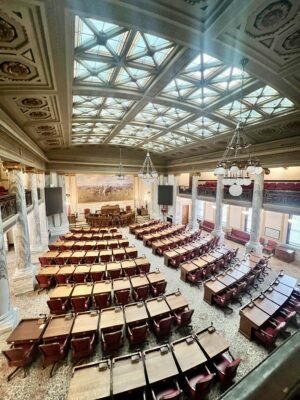
Capitol grounds are not only a space for governance but also a place for public memory—including the first sculpture of a pioneering Black woman in Wisconsin and the Zia sun symbol that New Mexico’s “Roundhouse” pueblo adobe architecture evokes. From military honorifics to regional artwork to civil rights memorials, capitol buildings are monuments to histories that deserve remembrance.
And for “capitol chasers” like me, these state houses have features that are simply cool. About halfway into my adventure, I enlisted a friend to join me. She became just as fascinated by our tours as I, and we have stories to tell about the time we tried in vain to find a Missouri senator to get us access to the state’s whispering gallery. She can share that we did, in fact, find a makeshift version in West Virginia… and that we climbed between the interior and exterior domes in Kansas. We even took a mother/daughter trip with our moms to North Dakota and South Dakota—not a road trip for the faint of heart!
A Capitol Investment
As we celebrate the United States’ 250th anniversary, I am reflecting upon each of the states that comprise our nation. (And yes, I did hit all fifty states 28 years after I visited my first capital. This goal culminated last fall with a visit to Montana, where my friend and I had a private tour of “The People’s House,” and Lieutenant Governor Kristen Juras greeted us for an audience—quite the grand finale!)
Now, I am reminded that the USA is a great country, comprised of 50 unique states with capitols that echo the spirit of their founders. What connects these fifty buildings is not architecture, politics, or geography. It is the shared belief that American life matters enough to be memorialized in stone for another quarter of a millennium.