Argentina Showcases Its Best Wine Traditions Annually at National Celebration
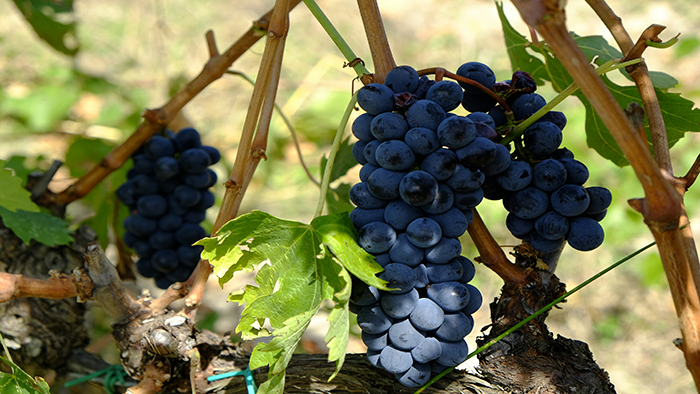
A certain type of chaos takes over Mendoza in late February and early March, but no one seems to mind. Trucks packed with Malbec grapes move slowly through intersections. Families who have picked the same rows for generations are up before sunrise, working the vines before the Andean heat can scorch the fruit. The aroma of fermentation and wood smoke envelopes the city.
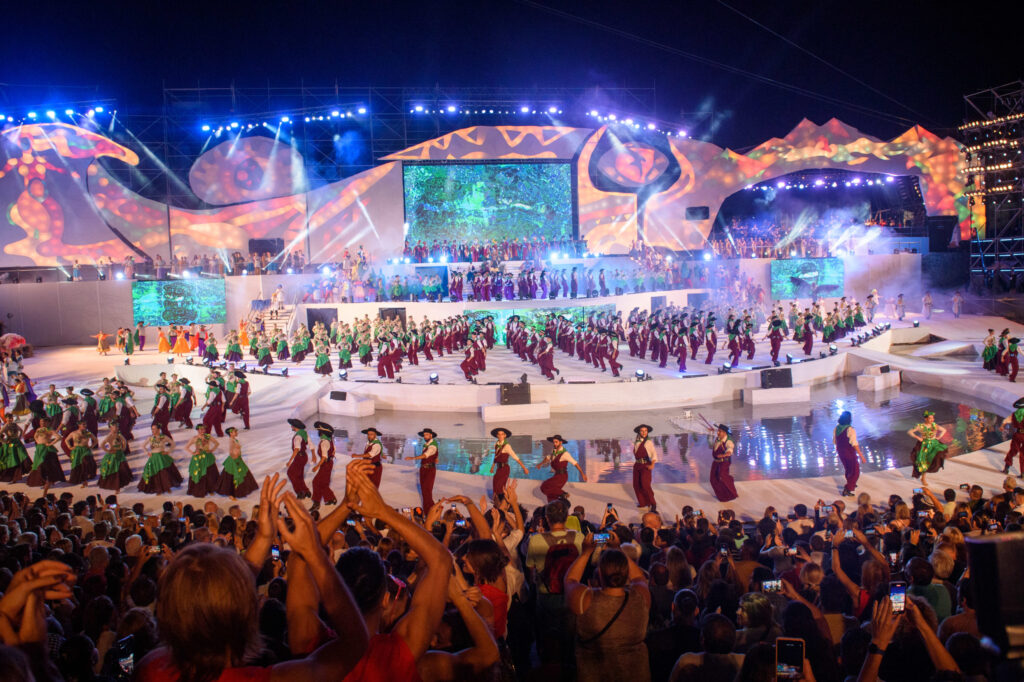
This is Vendimia, Argentina’s national harvest festival, and probably the most authentic celebration of farm work you’ll find anywhere in the wine world. It was officially established in 1936, but grape harvesting in Mendoza began long before then.
The Huarpe people farmed this land well before the Spanish arrived. The 20th century brought new traditions: each of the province’s eighteen administrative departments chooses a harvest queen, and the days leading up to the main event fill with ceremony.
The Blessing of the Fruits marks the spiritual opening of the season. Then comes the Vía Blanca, a parade of lights that moves through downtown in the dark—thousands of candles, quietly. The following day, the Carousel parade winds through the city before everything culminates in the Central Act at the Frank Romero Day Greek Theater, a massive outdoor show that sells out every year without fail.
Mendoza produces about 70 percent of Argentina’s wine, much of it grown in the foothills of the Andes between 900 and 1,500 meters above sea level. And for Mendoza Malbecs, elevation is everything. The sun is intense, afternoons are hot, and by midnight the temperature can drop 15 to 20 degrees Celsius.
That daily swing slows the ripening process, holding on to acidity and locking in the deep, inky aromas this varietal is known for. Try recreating that at sea level—it’s nearly impossible. That’s why a Malbec from Mendoza doesn’t quite taste like anything else.
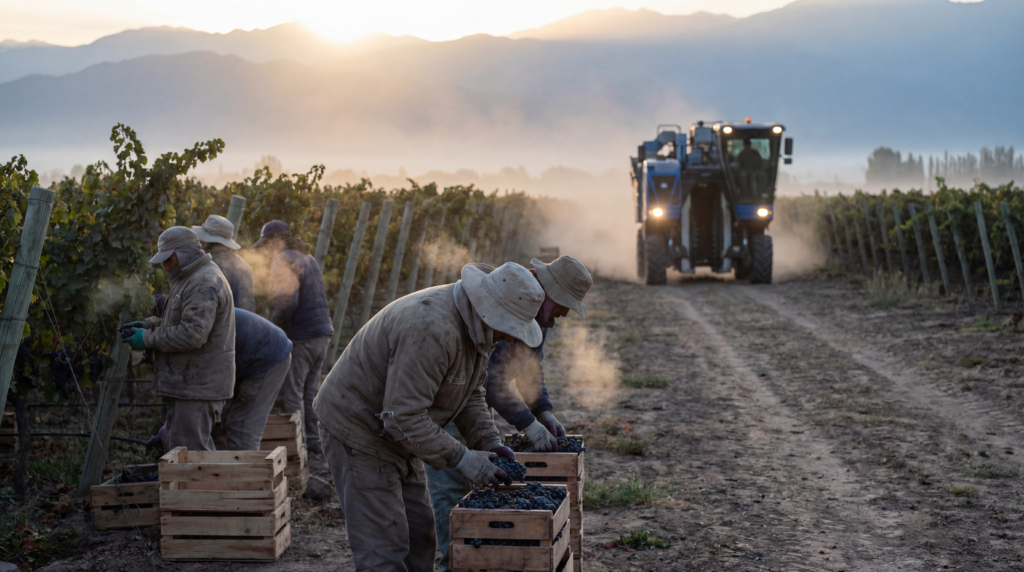
The harvest itself happens fast. Most bodegas pick by hand in the early morning hours, not out of romance but practicality. Cool fruit travels better and holds its integrity through processing. The bigger operations use mechanical harvesters on flatter land. The older, more prestigious plots are still done by hand, one cluster at a time, by people who have been doing it long enough to know when a grape is ready without checking the numbers.
Outside the vineyards, the city slows down. Downtown’s tree-lined streets, many built next to the acequias—irrigation channels designed by the Huarpe that still bring water to this desert city—fill with visitors from Buenos Aires, Europe, and wine tourists who have been coming for years. Restaurants in Chacras de Coria and Luján de Cuyo offer bigger menus. Tastings go late into the night. No one seems rushed.
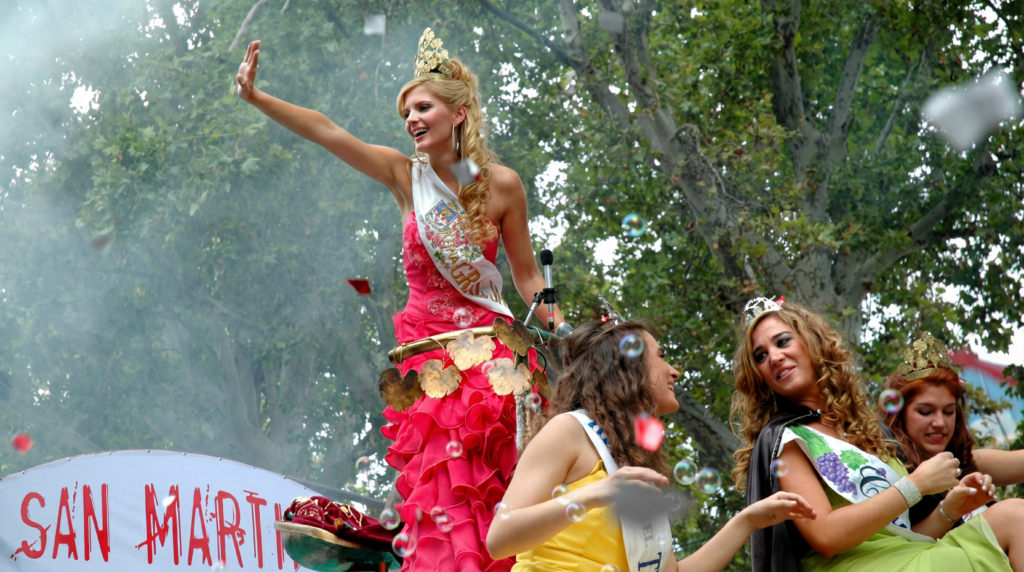
The harvest queen competition, which culminates in the national title of Reina Nacional de la Vendimia, draws some skepticism from outsiders. But spend any time around it and the cynicism softens. These are small communities recognizing themselves. The seriousness with which each department presents its candidate says more about local pride than anything else.
What Vendimia keeps returning to, underneath all the ceremony, is the basic fact that the harvest does not wait. It arrives when the fruit is ready, not when the calendar says so, not when the marketing plan says so. In a wine region as significant as Mendoza, that kind of discipline is worth paying attention to.