Where Ink Meets Wine
A certain delight in discovering that something ordinary is connected to a legacy of distinction.
Take the humble ballpoint pen with its clear, hexagonal barrel, blue cap and occasionally chewed end. It’s everywhere: in desk drawers, handbags, hotel counters and restaurant tables. Its familiarity renders it nearly invisible.
Baron Marcel Bich, the man behind the BIC ballpoint pen, built an empire on reliability, accessibility and the elegance of the unremarkable.
Yet beyond the pen, Bich’s legacy extends to the enduring beauty of Château de Ferrand, a Saint-Émilion Grand Cru Classé winery. Here, patience is rewarded not by replacement, but by the slow transformation of wine over time.
This interplay between the everyday and the exceptional naturally draws attention to the château itself—a place where history, artistry and terroir converge.
To understand Château de Ferrand, one must first appreciate Saint-Émilion. Situated on Bordeaux’s Right Bank near the storybook Medieval village of Saint-Émilion, it stands apart from the Médoc on the Left Bank, known for cabernet sauvignon-based blends from gravelly soils.
In Saint-Émilion, merlot and cabernet franc thrive on limestone and clay, producing wines that favor plushness and approachability over the firm structure and classic austerity of the Left Bank.
This is Bordeaux, yet it possesses a distinct character, shaped as much by its soils and climate as by its storied history. Nowhere is this more evident than at Château de Ferrand, perched atop Saint-Émilion’s limestone plateau.
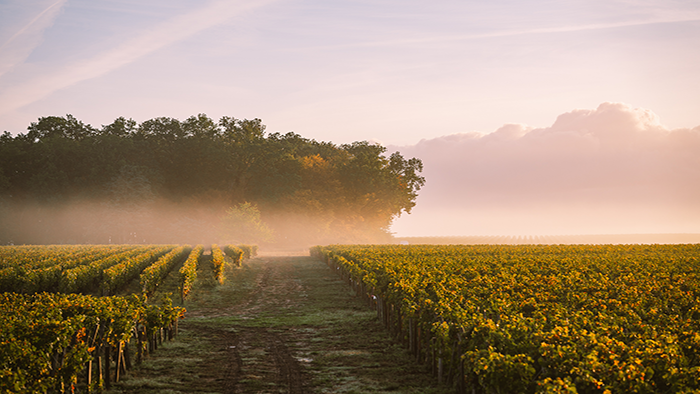
Here, the vineyards are historically linked to some of the appellation’s most refined and age-worthy wines. Limestone, with its porosity and structure, allows efficient drainage while retaining essential moisture below the surface, giving vines a consistent water supply even during warmer vintages.
Heavier clay soils often add density and weight. Limestone terroir tends to produce wines with freshness, tension and definition. In the glass, the influence appears as lift and balance. You taste clear fruit expression, polished tannins and vibrant energy.
Merlot leads Ferrand’s wines, with support from cabernet franc and a touch of cabernet sauvignon. Still, Ferrand’s merlot stands out for more than plushness. It shows definition and elegance—dark cherry, blackberry and cassis, with floral nuances and subtle mineral notes.
Recent vintages at Ferrand are a study in restraint and grace. Aromas unfurl slowly—ripe black fruit, violets, a whisper of graphite. Each sip glides across the palate, textures polished and tannins supple, with a brightness that lingers long after the last drop.
The estate itself reflects composure. Château de Ferrand’s stately architecture overlooks gently rolling vineyards, presenting a landscape that’s both commanding and serene. The interior tasting spaces balance heritage with modern design, creating an atmosphere of understated luxury.
A subtle acknowledgment of lineage is also present.
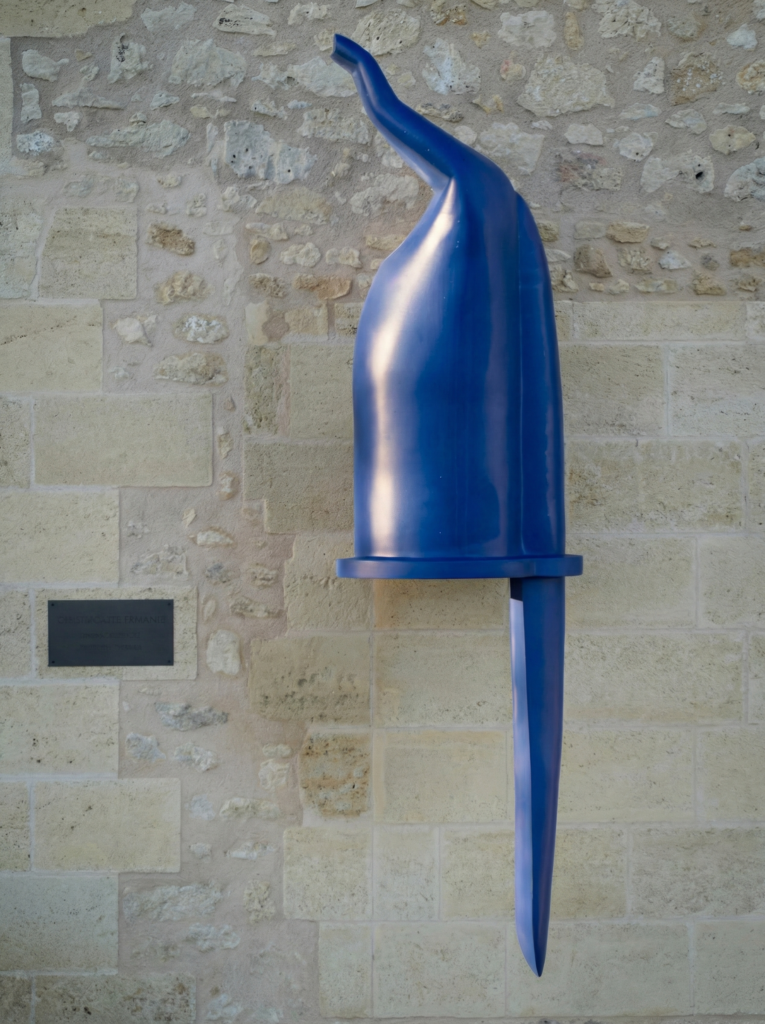
Art created with BIC pens graces the château’s interior, including a gallery showcasing unique works made with BIC pen ink of all colors. The tasting room features wallpaper with BIC’s signature blue ink. Once destined for signatures and scribbles, ink now becomes part of the estate’s identity.
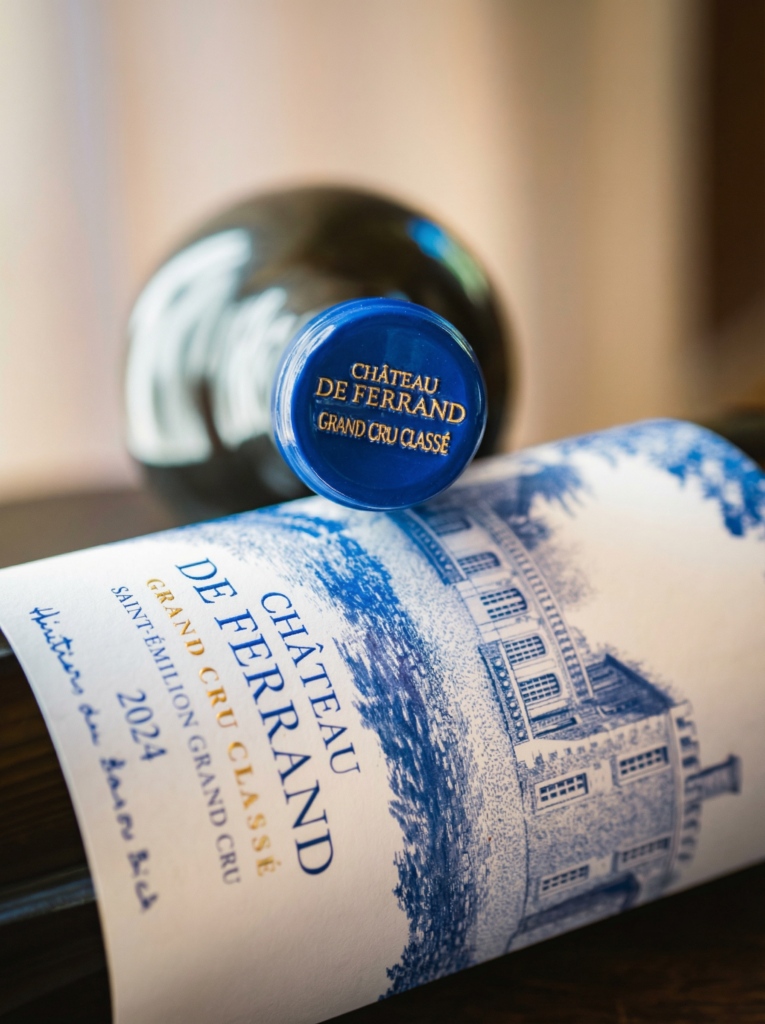
In 2025, exactly 50 years after Bich acquired the château, Château de Ferrand unveiled a new visual identity. The update is rooted in continuity, not reinvention. At its center is a new label for the estate, hand-drawn with a BIC ballpoint pen.
This label adds to the family’s private collection, turning an ordinary pen into a vessel for art. Each line—delicate and intentional—reflects Ferrand’s philosophy: clarity, restraint, and the quiet confidence to let the essentials shine.
However, the design serves a purpose beyond aesthetics.
Ownership today remains with the Bich family, guided by Pauline Bich Chandon-Moët. Under her stewardship, Ferrand has seen renovations, refined vineyard practices, modernized cellar operations, and an increasingly sustainability-driven philosophy.
Organic certification marks another chapter in the estate’s evolution. The wines exhibit expressiveness without excess, structure balanced by suppleness, and refinement without anonymity.
Whether in pen or wine, attention to detail matters. From the steady hand that draws each line to the practiced care in the vineyard, it’s these thoughtful, precise actions that ultimately leave the most lasting mark.