Italy’s Unwavering Obsession with Drying Grapes
Not all grapes destined to be wine are rushed to the press. Instead, they’re partially dried to shrink, concentrate and transform them into something of great intention.
Italy’s devotion to time is nowhere more evident than in wines made from dried grapes. Waiting is a deliberate act that reshapes the fruit before it ever becomes wine, ranging from sweet to dry. But they all have one thing in common: They evoke emotion and spellbinding rapture.
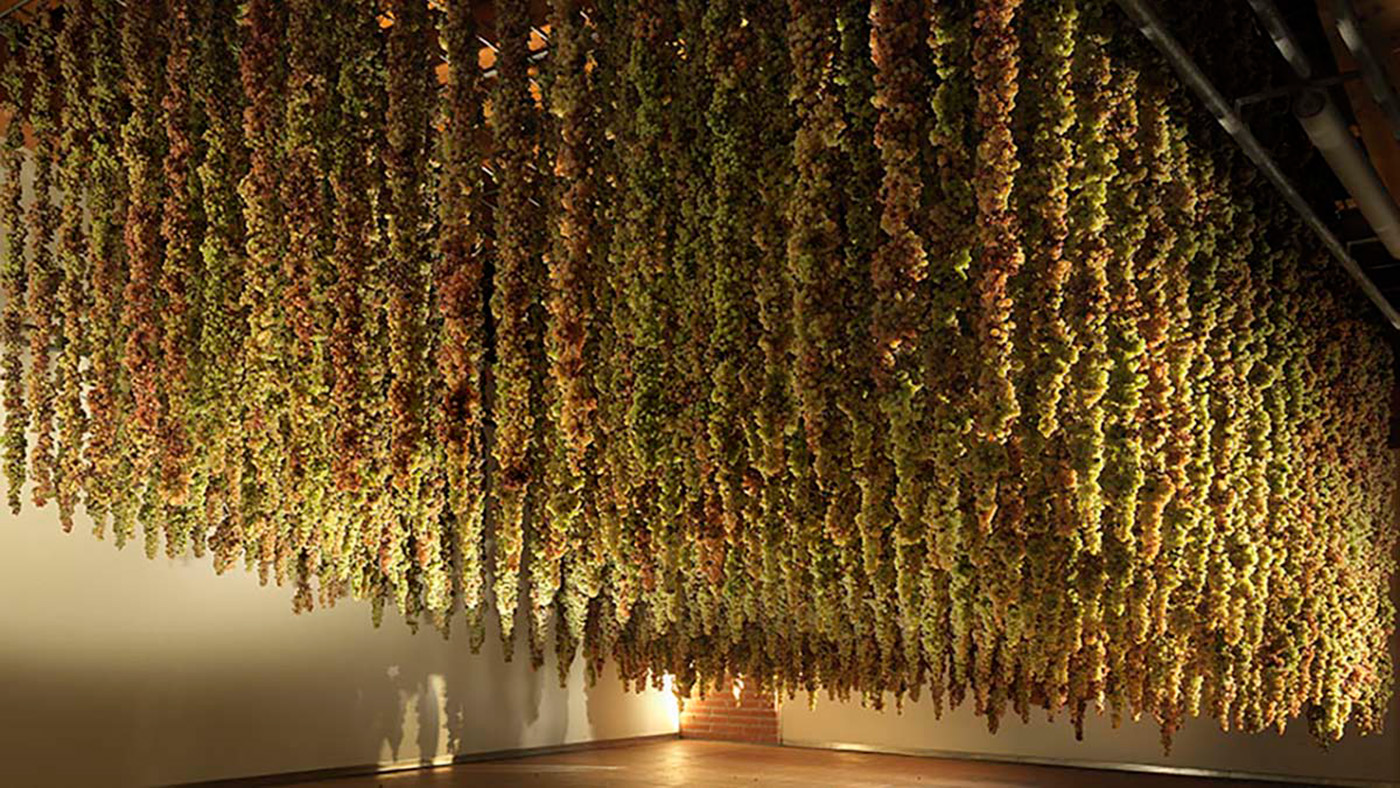
In Valpolicella, a province of Verona, Italy, this transformation takes place in airy lofts called fruttai, where grape bunches are laid on racks to dry. Weeks pass, often months. Natural and mechanized breezes coax the grapes to shrivel, concentrate their sugars and deepen their flavors, ultimately suggesting something darker and more introspective.
This process, called appassimento, is made of love and patience, but it’s nothing new. The Romans made passum, a wine from dried grapes valued for its richness and ability to endure travel. Removing water from the grapes meant stability, and of course, stability meant survival. As early as the first century A.D., writers like Pliny the Elder documented wines of varying strength and longevity, already aware that time and transformation mattered.
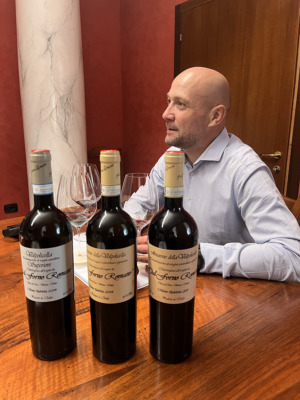
The most recognized expression today is Amarone della Valpolicella from the Veneto region. Structured and dry, born from dried grapes such as corvina and rondinella fermented to completion, its texture is reminiscent of a wine wearing a velvet robe.
Why? Because drying the grapes causes them to lose water, significantly altering the structural balance of the resulting wines, giving way to richness and a unique “glossy” texture. Because the sugar content is higher, fermentation can produce wines with elevated alcohol levels, contributing to their seduction and warmth. Amarone’s counterpart, Recioto, retains a measure of sweetness.
And within Valpolicella itself, interpretation varies widely—from the depth and concentration of Dal Forno Romano, to the more modern style of Speri. Other producers to explore include Giuseppe Quintarelli, Masi and Allegrini.
But the story doesn’t belong to Valpolicella alone.
Farther west in Breganze, a town in the province of Vicenza, Veneto, Italy, Maculan presents another interpretation. Its Torcolato, made with vespaiola grapes traditionally twisted onto strings and hung to dry, leans toward precision rather than power. It offers concentration held in balance, with richness contained rather than asserted.
Grapes are harvested at optimal ripeness, then hung in well-ventilated areas where air circulates, and moisture slowly evaporates. Modern producers may manage humidity and airflow, but the essence remains unchanged: Time does the work. What remains is the concentration of character.
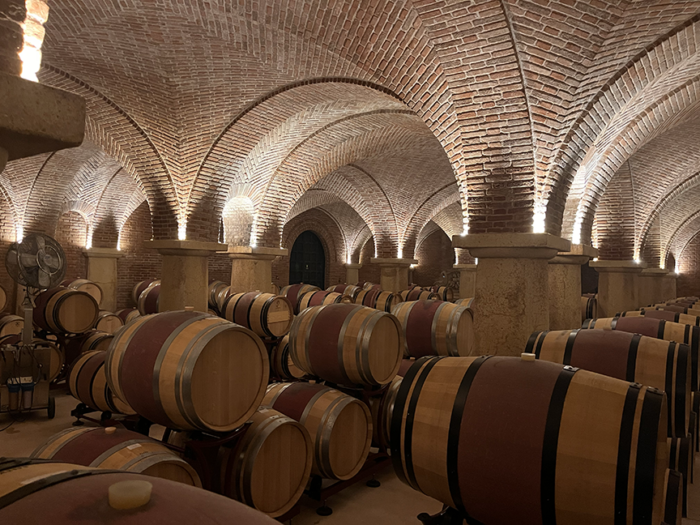
In Tuscany, Italy, Vin Santo dessert wine takes a more contemplative path. Trebbiano and malvasia grapes are dried, then aged in small wooden barrels—caratelli—often stored in attics where temperatures rise and fall with the seasons. Oxidation is embraced. The wines rest for years, deepening to a golden amber color while developing complexity. It’s sweet nectar, not cloying, and is traditionally served with cantucci, or Italian almond biscotti.
Tradition is also woven in here, with some families aging a barrel from a child’s birth, only to open when he or she becomes 10 or even 15 years old—a testament to wine made for time itself.
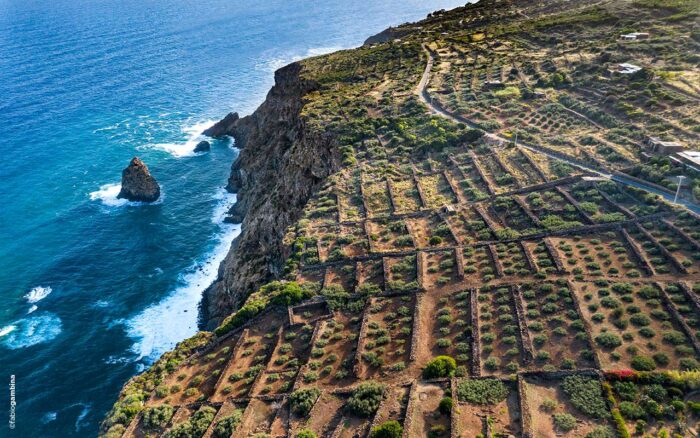
South of Sicily’s west coast, the volcanic island of Pantelleria offers another expression. Zibibbo grapes dry under the sun and wind, concentrating notes of apricot, citrus peel and wild herbs. Producers like Donnafugata define the island’s contemporary voice; Bukkuram from Marco De Bartoli offers a deeper, meditative style.
And yet, for all its history, appassimento is evolving.
Producers today are refining the balance, shifting away from sheer density toward clarity and lift. Climate has also complicated the equation. When grapes arrive already rich in sugar, drying them further becomes less about necessity and more about intent. When does concentration tip into excess? The answers are exploratory, determined by each producer’s instinct.
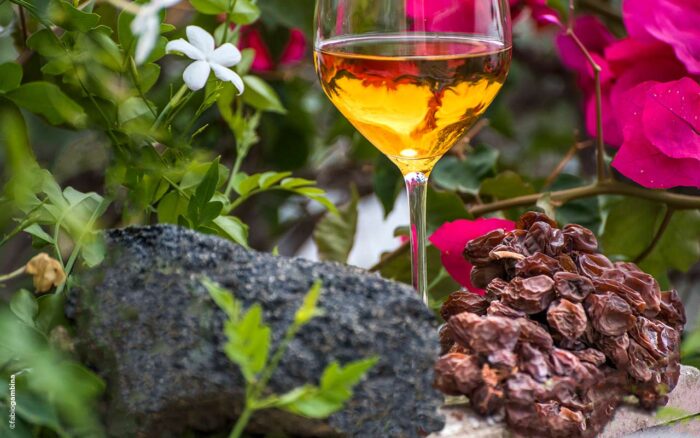
But for the drinker, these wines are for us to experience thoughtfully, as they move slowly across the palate, broad and deliberate. Dried cherry, fig, citrus peel, almond, spice. These are flavors that feel transformed rather than fresh. Often, there’s tension between richness and restraint, sweetness and structure.
In an era defined by immediacy, wines made through appassimento ask for patience. And, they are certainly worth the wait.