Mexico’s Ancient Teotihuacan Ceremonial Center Is a Mystery That Continues To Baffle Scholars
Are we all just dust in the wind? The American band Kansas thought so. Standing in the shadow of Teotihuacan, it’s hard not to see their point.
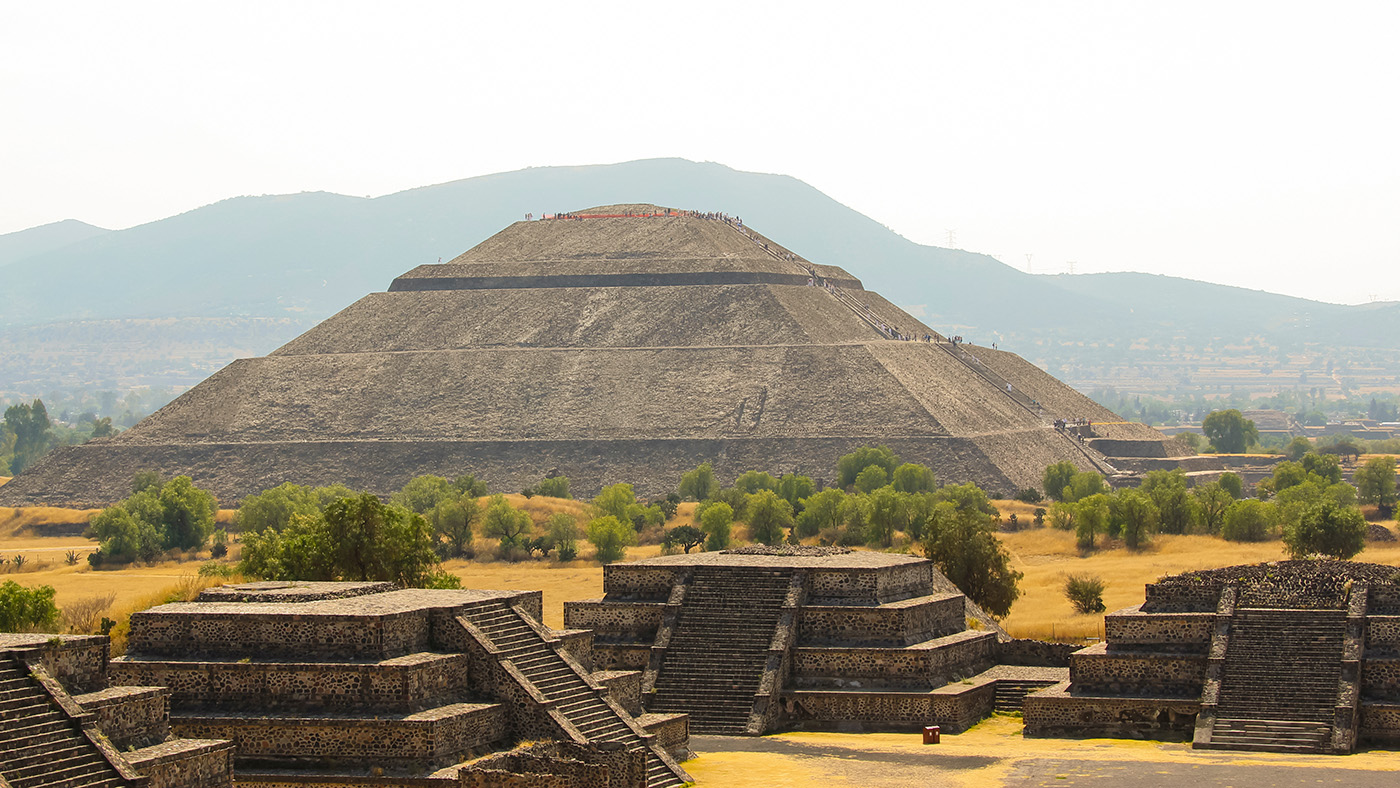
About 30 miles northeast of Mexico City, in the sun-baked, high-altitude basin of central Mexico, sits an ancient city that once rivaled Rome in size and splendor. Today its stones are all that remain—silent witnesses to lives and legends swept away by time. Nobody knows who built it. Nobody knows what the people called themselves. Nobody knows exactly why it collapsed.
What we do know: for roughly a thousand years, beginning around 100 BCE, it was one of the largest cities on earth. Then—nothing. It vanished, silent as a dinner guest slipping away without saying goodbye, leaving only a tableful of unfinished conversations.
Arriving here, you won’t find tidy answers or interpretive plaques. Instead, you enter a city that once welcomed the world. Recent discoveries reveal Teotihuacan as a mosaic of neighborhoods—Oaxacans, Gulf Coast peoples and others lived side by side in sprawling apartment compounds, a cosmopolitan hub rarely seen in the ancient world. Wealth and space were shared more equally than in other ancient cities, inviting not just questions, but a sense of awe at how differently a metropolis could be built.
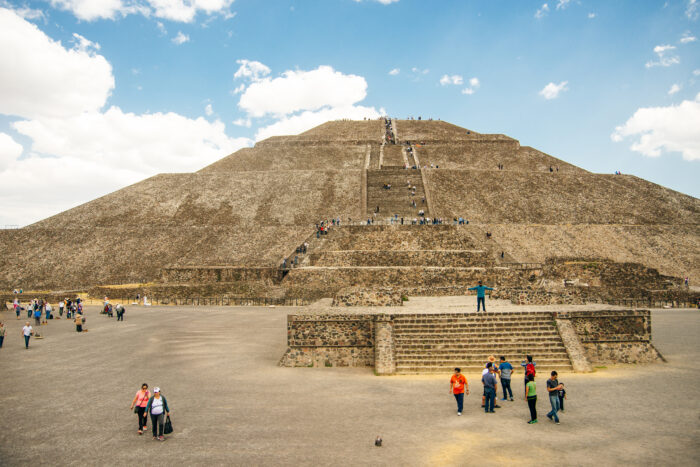
The Pyramid of the Moon rises like a silent sentinel, its stone steps stacked as if created by giants with a knack for geometry. Below it, the Avenue of the Dead stretches arrow-straight for more than a mile, lined with platforms that were never actually tombs at all. The Aztecs, arriving centuries later, misread the place entirely, projecting endings onto what was once surging, teeming life. Even the names here are guesses. This city resists labels the way wine resists a single tasting note.
Climbing the Pyramid of the Moon, your palms meet sun-warmed volcanic rock that is as rough as a cat’s tongue. Each step is an extra steep lunge; each pause for a breath is filled with a sluggish breeze and the native birds that fill the acoustic landscape.
From the top, the city unfolds like a map drawn by people who loved grids, order and symmetry. Platforms, plazas and pyramids are laid out with the kind of deliberate precision that makes modern urban planners appear as though they were working with familiar refrigerator word magnets. The scale makes you small. It’s humbling and thrilling.
And yet, the more you look, the less you understand. Who built this place? The Aztecs called it “the place where the gods were created,” which is either deeply reverent or an admission that they had absolutely no idea either. Scholars still debate it. The city simply was, and then it wasn’t.
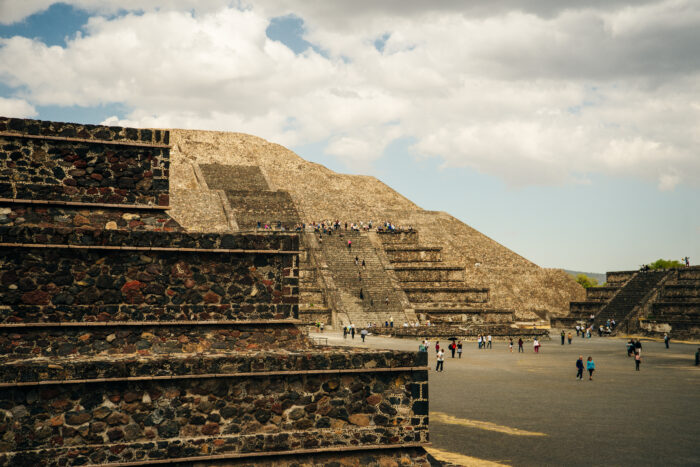
The evidence of ingenuity is quite impossible to ignore, however. The people of Teotihuacan mined obsidian from nearby mountains. With this volcanic glass so sharp it could split a hair, they shaped it into tools, weapons and ritual objects with a precision that modern surgeons might respect. The pyramids themselves are engineering stunners. The walls are red and black volcanic rock, layered with concrete, plastered smooth, then painted in colors so vivid they must have been visible for miles.
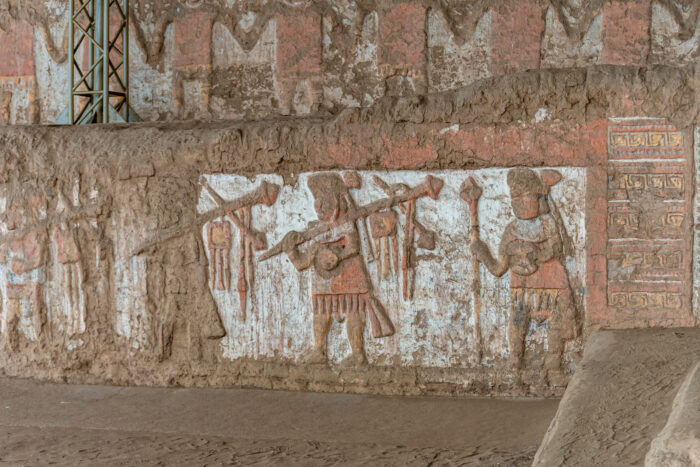
“Look at the murals,” said José Luis, a Mexico City historian, pointing to faded brick-red images with practiced fingers. “Processions, rituals, water everywhere.” He speaks like a detective at a crime scene—not offering answers, just clues. Water courses through everything: rivers, canals, vessels. The city didn’t just use water; the people revered it, weaving it into daily life and belief. But where is the water today? Not in any immediate view.
The colors have faded, bleached by 2,000 years of sun. But close your eyes, and you can conjure pyramids ablaze in red, white and blue; crowds weaving through plazas in brilliant procession; music, noise, scent and heat.
At its peak, 100,000 people lived here—more than in Rome at the same moment. And beneath the plazas, archaeologists are still finding traces of everyday abundance: obsidian tools, painted pottery, even remnants of feasts shared in the shadows of the pyramids.
And so, even as you try to reconstruct the city from its color, sounds, remnants and rock, you are left with questions but no answers. And that, it turns out, is the gift. Teotihuacan doesn’t explain or apologize. It stands ancient, immense, magnificently unbothered, inviting you to linger in its mystery.