Gotta Catch ’em All: Learning the Ups and Downs From a Die-Hard Hobby Enthusiast
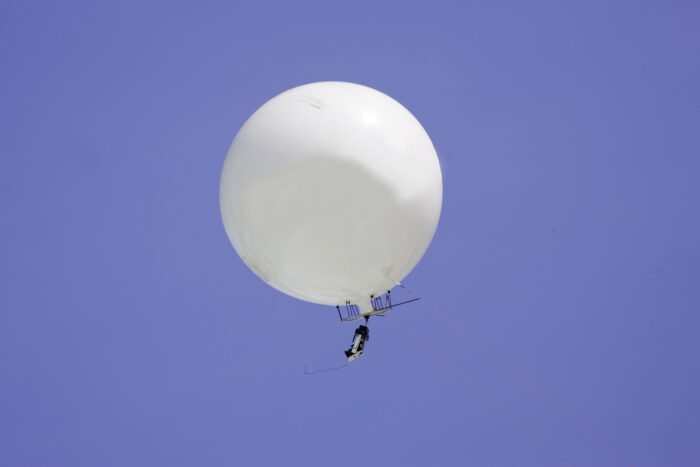
At the northern edge of Georgian Bay at the top of Lake Huron in Ontario, Canada, a handful of the passengers on Viking’s Great Lakes expedition cruise, including me, gathered on the uppermost deck at 7 a.m. We’d come for a bit of citizen science: launching a weather balloon that would report vital information back to the National Oceanic and Atmospheric Administration.
We watched the balloon float high into the sky, carrying with it a small parachute and a radiosonde—a small box that collects readings on temperature, humidity and pressure. It then uses radio signals to transmit that information to NOAA. Once the atmospheric pressure becomes too heavy, the balloon bursts, and the parachute gently brings the entire apparatus to the ground.
I spent that morning amazed that the weather conditions had coalesced in the perfect way to allow us to even launch the balloon. I had no idea at the time that a whole community of people excitedly anticipated the moment the balloon would burst so they could run out to retrieve the radiosonde they meticulously tracked on its flight.
Australian Mark Jessop is one of those people. He got his start tracking weather balloon radiosondes in 2010, when a fellow amateur ham radio enthusiast brought him along on a tracking session.
“Back in those days, radiosondes didn’t have onboard GPS receivers, so you had to track them using directional antennas and ‘radio direction finding’ techniques,” Jessop said. “Nowadays, all radiosondes have GPS receivers and transmit their location, making them much easier to find.”
Jessop took to the hobby so enthusiastically that he worked with other developers to build a website, SondeHub, that shows the real-time flight paths and locations of all the radiosondes in the sky at any given moment. About 2,000 receiving stations, or spots that receive radio pings from the radiosondes, share location data with SondeHub.
At any given time, the site has between 400 and 500 active users from all around the world. Users of the site follow small parachute icons that represent a descending balloon. Clicking on the icon reveals the full flight path and a prediction of where the radiosonde will land. Then, using radio equipment, the trackers head out to the spot and follow the signal of the radiosonde until they can grab it.
According to Jessop—whose trips to collect radiosondes are double duty, allowing him to put his own open-source code on the site to use and to find new bakeries around the countryside—hobbyists collect radiosondes for a variety of reasons, the first being environmental.
“Meteorological radiosondes are typically considered single-use devices,” he said. “For the most part, it doesn’t make financial sense for the agencies launching them to go and recover them all; and indeed, many would be not possible to recover. So, they end up as litter. The companies manufacturing the radiosondes … are making efforts to make them more easily biodegradable, but there’s only so far you can take that. We’re cleaning up their litter.”
Some radiosonde hunters use the process as a competition with themselves to gather signals from further and further away; some repurpose the radiosondes into tracking devices for their own amateur balloon flights; and others just find joy in the chase—almost like they’re playing a game of Pokémon Go.
“Gotta catch ’em all!” Jessop said.
As for what happens when trackers recover these pieces of “sky trash,” as Jessop jokingly called radiosondes, the uses vary just as much as the reasons for hunting them in the first place. The most common radiosonde model runs on Energizer lithium batteries and still have plenty of use left, which means free batteries if you can find them. The radiosondes can also be reprogrammed and used as weather stations; radio beacons and transmitters for ham radios; and amateur-level balloon tracking.
“Each radiosonde typically consists of a battery, a GPS receiver, some kind of microcontroller, sensors for temperature, pressure and humidity, and a radio transmitter to send that signal back to the ground,” Jessop explained. “Lots of useful things that can be reused!”
Some trackers, though, simply hang on to the devices as they are, displaying them like trophies—a physical representation of memories collected while out in nature, following an elusive device literally falling from the sky.