
The Conversation No One Is Having—But Every Couple Feels
A woman once sat across from me with a diversified portfolio. Liquidity was strong. Insurance in place. Estate documents drafted..
“We have more than enough,” she said calmly. “On paper, we’re solid. So why do I still feel like it could disappear overnight?”
By every objective measure, she was secure. But her nervous system didn’t agree.
That’s financial set point. And if you don’t understand it, you will keep trying to solve emotional misalignment with math.
The Thermostat You Didn’t Know You Had
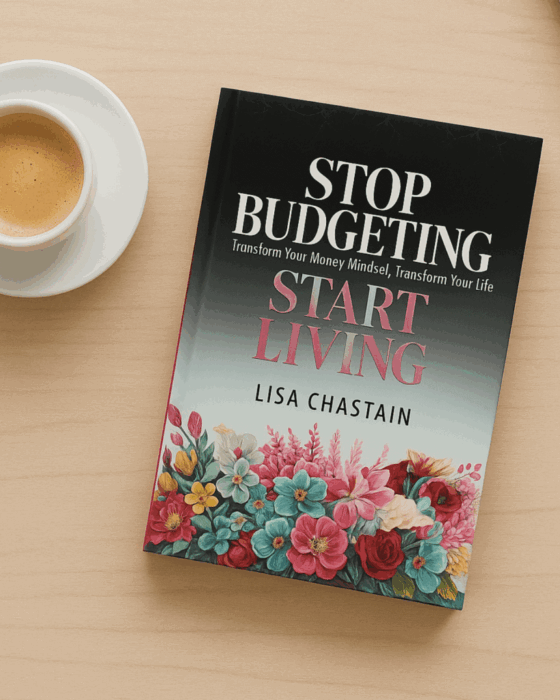
In my book “Stop Budgeting, Start Living,” I unveil that money is emotional before it’s mathematical. After two decades of sitting in rooms with women navigating real wealth, one thing needs to be made clear: You don’t operate from knowledge. You operate from calibration.
Your financial set point is the internal thermostat formed during your modeling years. It was shaped by who held power around money; if finances created tension or stability; how risk was handled; whether wealth was admired or criticized; and if security meant saving or controlling.
That conditioning becomes your “normal”—not intellectually, but biologically.
You can build a $10 million net worth and still react like the child who repeatedly heard, “We can’t afford that.”
Opposites Attract Financially
One couple I worked with looked perfect on paper. She was a disciplined operator who was conservative with leverage, strong on liquidity. He was a visionary that was comfortable with risk and believed capital should move.
They weren’t arguing about investments and identity. She equated liquidity with safety; he equated liquidity with stagnation.
Neither was wrong. But neither realized they were speaking from different financial set points.
This is where most money conversations derail. It sounds something like this: “You’re reckless.” “You’re controlling.” “You don’t trust me.”
In reality, two nervous systems are trying to protect what they learned early on in life about what equals survival. When couples understand that, the temperature in the room drops.
Why Discipline Isn’t Enough
Traditional financial advice still defaults to behavior correction, including cutting spending, increasing discipline and sticking to the plan. Discipline matters, but it does not override conditioning.
If a woman grew up in volatility, calm may feel unsafe. If wealth created conflict in her childhood home, she may unconsciously minimize success to preserve connection. If she inherited money without emotional preparation, she may feel shame instead of stewardship.
Behavioral finance research confirms that under stress, emotion drives decision-making. Market downturns trigger fear. Bull markets trigger overconfidence. Plans fail not because the math was wrong, but because internal alignment was never assessed.
That’s not a planning failure. It’s an emotional literacy gap.

Higher Stakes, Deeper Wiring
Today’s high-capacity women are not just managing household budgets. They are negotiating equity packages; managing business cash flow; navigating blended family estate structures; evaluating private investments; and balancing protection and liquidity.
Add partnership dynamics, inheritance complexity and multigenerational responsibility, and money becomes deeply relational.
I’ve watched estate conversations stall because no one wants to define “fair.” I’ve watched seven-figure opportunities bypass scrutiny because they validated identity. I’ve watched women outearn their partners and then downplay themselves to keep the peace.
None of that is about numbers. It’s about calibration.

Raising the Set Point
The goal isn’t to eliminate your financial set point, but rather to expand it consciously. That requires pattern awareness, nervous system regulation and a shared language.
Notice your defaults. Do you tighten when liquidity increases? Overextend when confidence rises? Avoid numbers when anxiety spikes? Patterns are data.
If your nervous system cannot tolerate holding more—more wealth, more responsibility, more visibility—it will contract. Raising income without raising capacity creates instability.
Couples need more than net worth statements. They need clarity around risk philosophy; leverage comfort; values and identity work; liquidity thresholds; legacy intentions; and protection strategy.
When partners understand each other’s wiring, disagreement becomes strategic dialogue instead of a personal attack.
The Real Decision
The most important financial decision you will ever make is not which fund you select. It is whether you are willing to examine the conditioning driving your choices. Because until you do, your financial set point quietly determines how much wealth you can hold, risk you can tolerate, and how peaceful your relationships feels.
The women I work with are not looking for another budgeting app. They are looking for congruence. When financial set points are understood, money stops being a battleground. It becomes a tool. A mirror. A mechanism for alignment.
And when alignment is present, wealth expands—not just numerically, but relationally.
That’s the conversation we should be having.