
Next-Gen Heirs who are choosing a New Path for their Family Empire
By Kacy Bryant
Heirs who redirect wealth into philanthropy often describe themselves as inheriting a problem along with a portfolio. Justin Rockefeller frames values‑aligned investing as a response to the realization that capital markets can both create and repair damage, arguing that investors must measure both the positive and negative impacts of every business they own. Warren Buffett’s children each anchor their giving in arenas where capitalism’s failures are most visible. They address the prevalence of food insecurity, conflict, and social exclusion while acknowledging that there are multiple ways to give away money, and not all of them are smart.

This ambivalence becomes most explicit in Peter Buffett’s critique of the “charitable‑industrial complex,” where he calls elite giving “conscience laundering”. Many people and families who control massive fortunes find that they feel better about “accumulating more than any one person could possibly need” by “sprinkling a little around as an act of charity.” That method of justification reveals that these wealthy individuals are able to recognize that their lifestyle depends on a system of inequality that is bigger than the numbers in their bank accounts.
Many heirs navigate a tension between intimate distance from the original wealth and intense proximity to its consequences. Aileen Getty, who never worked in the oil business, has directed millions into climate activism, co‑founding the Climate Emergency Fund to back disruptive groups like Just Stop Oil and Extinction Rebellion. Her giving targets the very carbon economy that enabled the Getty fortune. Instead of leaning into the family legacy for success, Aileen has created a separate personal identity for herself by wholeheartedly accepting responsibility for what that legacy made possible.
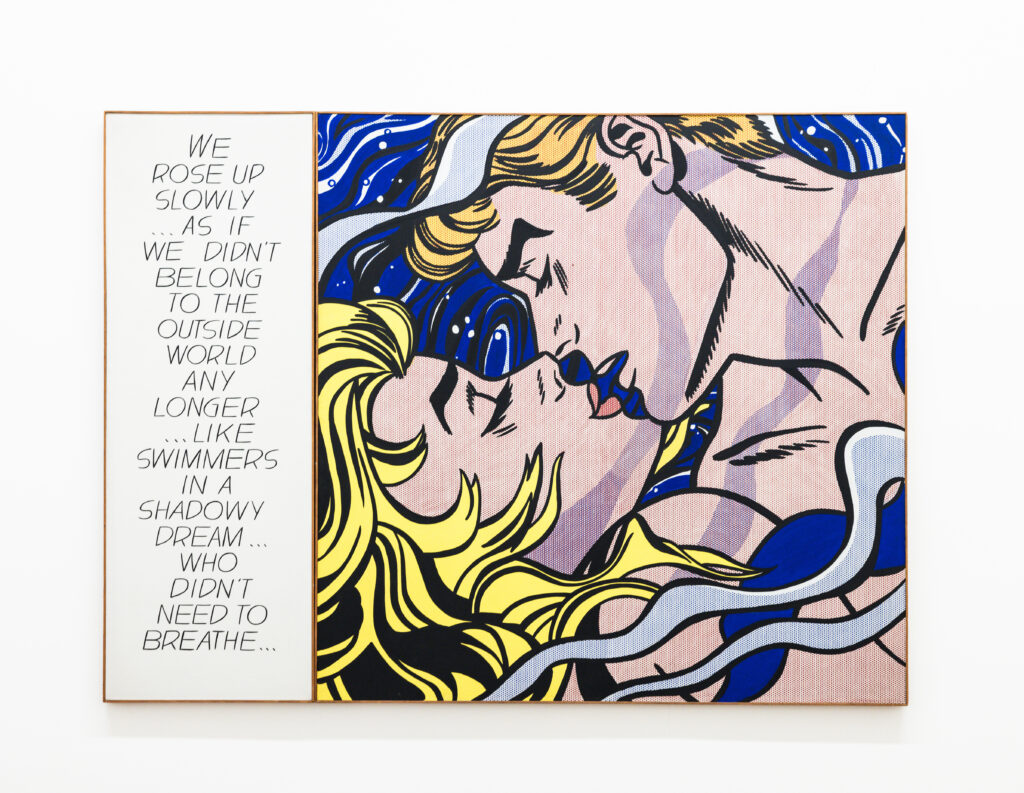
Agnes Gund likewise turned a Roy Lichtenstein painting sold for 165 million dollars, a cherished symbol of elite status, into the Art for Justice Fund, seeding it with 100 million dollars to fight mass incarceration. As she put it, “This is one thing I can do before I die” and “what I need to do.” The emotional urgency in that statement reflects how a life built upon the success of others leads to the revelation that the truth is much deeper than many of us realize. Focusing on justice for people who have most likely never gained access to the world of high art acknowledges that their existence allows for that exclusivity.
For a different set of heirs, the move is not to reject capitalism, but to redesign it. Justin Rockefeller’s impact‑investing work through The ImPact urges wealthy families to treat every investment as a moral choice, organizing portfolios around geography, asset class, return profile and “impact strategy” so that returns and social outcomes are evaluated together. Rather than quarantining “doing good” in a foundation, he pushes for capital markets themselves to reflect family values, which allows heirs to stay inside finance while softening its sharpest edges.
Laurene Powell Jobs takes this logic further by building Emerson Collective as an LLC. Rather than it being a traditional foundation, she blends grants with political advocacy and ventures investments in education, immigration, and climate. The aim is to “renew some of society’s most calcified systems” and create “new possibilities” through a vehicle that can own media, fund startups, and influence policy without the constraints of standard philanthropic regulation. The LLC structure offers heirs who are fluent in entrepreneurial culture a way to preserve the thrill of risk, control, and innovation while recoding it as moral action.
Next‑generation heirs often reject passive grant-making in favor of “systems change,” partly because traditional charity feels too close to what Peter Buffett condemns as “philanthropic colonialism.” Peter’s own NoVo Foundation has used his critique of top‑down giving to justify support for grassroots organizing and Indigenous leadership. Alexander Soros, taking over the Open Society Foundations, similarly insists he will pursue his father’s agenda of free speech and minority rights while adding a sharper focus on voting rights, abortion, and gender equity.
There is a tension that can be difficult to escape for heirs who wish to utilize the power they were promised at birth. Soros, for example, wishes to differentiate himself enough to feel authentic without betraying the founding narrative that justifies the family’s public influence. For many heirs, system‑level philanthropy resolves this conflict by allowing them to oppose specific outcomes of capitalism without disowning the capital itself.

Daniel Lurie, an heir to the Levi Strauss clothing fortune, founded Tipping Point Community in the Bay Area after working at New York’s Robin Hood Foundation. As a way to to earn belonging in a community transformed by the fortune his family represents, his philanthropy explicitly focuses on the 1.3 million regional residents who cannot meet many of their basic needs. He frames the Bay Area as “the epicenter of the world” and simultaneously “a tale of two cities: the haves and the have‑nots,” arguing that poverty must be tackled by a coalition of private, nonprofit, and government actors because only government “has the dollars” to solve it at scale.
Tipping Point’s decision to operate without an endowment and to channel 100 percent of donations directly to grantees mirrors a psychological refusal to appear insulated from the urgency of poverty. By engineering constraints into the organization’s structure, Lurie aligns with a more time‑bound, performance‑oriented, and locally accountable model. This approach also satisfies a craving for immediate feedback and measurable progress that many heirs socialized in entrepreneurial or financial culture find more emotionally tolerable.
Opting out of straightforward capitalism is rarely a clean exit. Instead, these heirs rewire the pieces of the system they have been given to control so that investing, spending, and giving can be narratively reconciled with a claim to justice. With their shared moral unease about unearned advantage, preference for tools that redesign rather than redistribute, and identity shift, these heirs transform their legacy from beneficiary of success to active agent of change.
With immense amounts of wealth comes a power that can transform dollar signs into unfathomable opportunities. When those opportunities are leveraged for good, the kind of good that most of us can see, legacy is rewritten.