It Promises Relaxation, Recovery and Reduced Stress but the Discovery Inside Is Simpler—and Far More Surprising
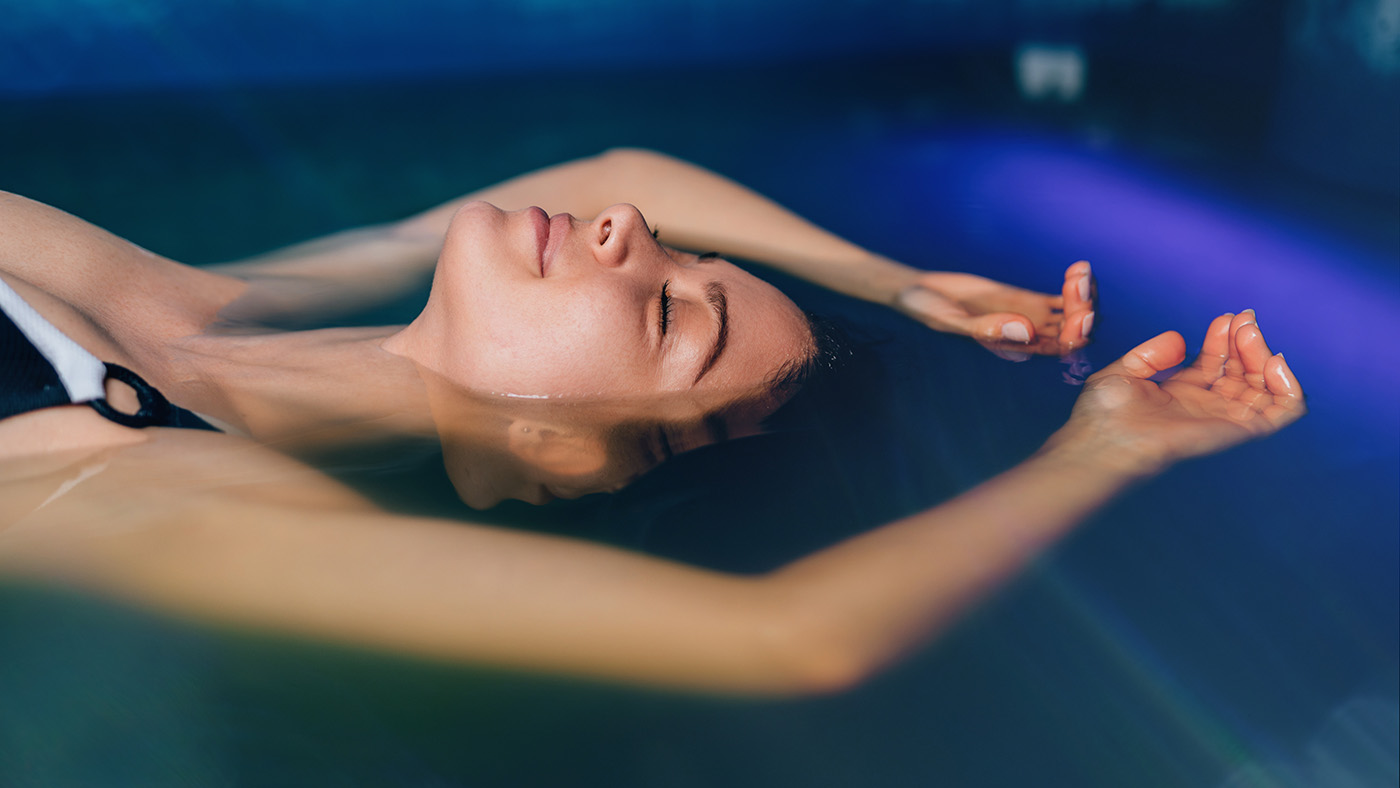
The first thing I lost during this sensory deprivation experiment wasn’t the weighty awareness of my body. It was my inability to measure time that I initially became aware of after entering the float pod.
“After a while in the tank, you’ll lose sense of everything,” the spa owner explained before I got in. “You’ll be on your back, eyes closed and realize you don’t know where your hands are.”
Preceding my arriving, I had worried about how I would adapt to the enclosed space. Would I feel claustrophobic once the lid closed? Would the darkness feel oppressive? The staff explained every step and reminded me that I remained in control. I could leave the pod open. I could exit at any time.
But instead of worrying about being in the pod, I found myself wondering what time it was. How long had I been floating? 10 minutes? 20? Was I halfway through the session? Nearly finished? With no phone, clock or notifications, I became acutely conscious of how often I measure my day.
The History
Float therapy began not as a wellness treatment but as a scientific experiment. In the 1950s, neuroscientist John C. Lilly developed early flotation tanks while studying consciousness and sensory deprivation. Researchers wanted to know what happened when external stimuli were drastically reduced. The earliest tanks were more cumbersome than today’s sleek pods, requiring participants to float upright while using breathing apparatuses.
Over time the technology evolved. What began in laboratories eventually found its way into wellness centers where floating became associated with relaxation, meditation, athletic recovery and stress reduction. Today float therapy occupies a unique space between science, wellness and self-care.
The Science
Modern float therapy is often referred to as Reduced Environmental Stimulation Therapy, or REST.
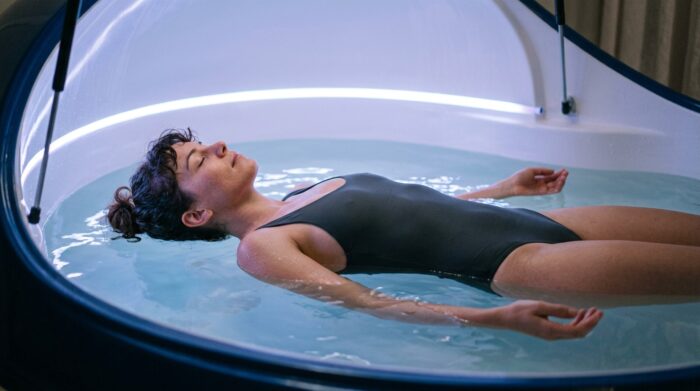
Participants float in body-temperature water saturated with Epsom salt, creating near-effortless buoyancy. Light is minimized. Sound is reduced. Pressure points disappear. The goal is not sleep—though one may safely fall asleep—but rather to reduce sensory input.
Research suggests floating may encourage a parasympathetic, or “rest and digest,” response. Some studies have found reductions in stress and anxiety, while many participants report feeling deeply relaxed afterward and some report feeling an increase in creativity. The theory is simple: When the brain receives fewer demands, the nervous system has an opportunity to settle.
Losing the Clock
The science made sense to me. What surprised me was how difficult it was to stop thinking about time.
At first my thoughts kept circling back to the same questions: How long have I been here? How much longer do I have? I considered getting out to check. I willed myself to quiet my thinking.
As the session continued, I noticed the tension in my neck. And then I noticed it releasing. Without gravity pressing me into a chair or floor, the edges of my body seemed less distinct. And, at some point, I did become unaware of where my hands were.

The Surprising Part: Play
Then something unexpected happened. The experience became playful. The pod was not large, but I found myself gently swaying through the water, shifting my body in small movements. No one could see me. This was the glorious aha moment. Remembering that I was alone.
For this hour, no one expected anything from me. There was nothing to accomplish and nowhere to be. The privacy became luxurious. I wasn’t exercising, producing, organizing, optimizing or even particularly meditating. I was simply there.
Many wellness experiences promise transformation. Float therapy is often discussed in terms of recovery, performance and healing. Yet what stayed with me was something simpler: the rediscovery of play.
Without the clock and without an audience, my body wandered.
Why Now?
Perhaps the growing interest in float therapy says less about salt water and more about modern life.
Most of us move through our days surrounded by notifications, schedules, noise and the demands for attention. We track our steps, monitor our sleep, answer messages, check the time and move from one obligation to the next. In that context, an hour without a clock begins to feel almost radical.
Float therapy is often marketed as a way to reduce stress, improve focus or support recovery. Yet part of its appeal may be something even more basic: It offers a temporary escape from measurement itself.
For one hour, there is no productivity metric. No inbox. No audience. No expectation that the experience accomplish anything at all. That absence may be what made it feel most unusual for me.
What Stayed
When a gentle jet signaled the end of my session, I emerged slowly. I showered. I dressed. I spoke to the women at the front desk, though conversation felt oddly difficult. Things felt a bit otherworldly, yet also centered and unrushed.
By the time I drove home, the sensation had largely faded. The feeling didn’t stay. But the invitation did.
Science may explain how float therapy works but it doesn’t explain why the experience felt so rare. The luxury wasn’t merely floating. The luxury was allowing my body to drift when my mind was freed from measurement. That’s why I suspect I’ll return.