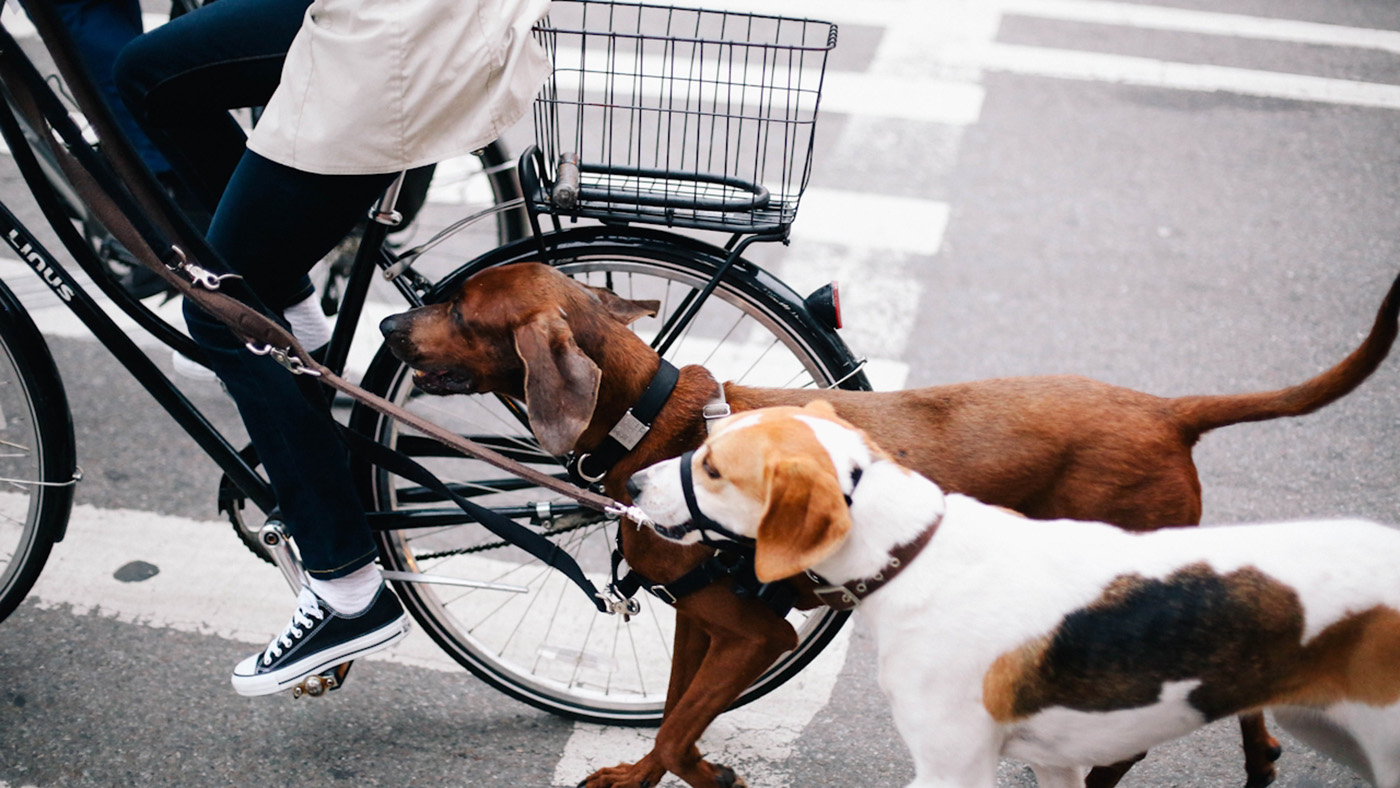
Your Gym Can’t Compete With Your Canine Because Who Can Say No to That Face?
It’s easy to hit the snooze button instead of heading to the gym. It’s much harder to skip a walk that your dog is eagerly waiting for. One look at your pooch pacing by the door or watching out the window is enough to get you moving.
You can cancel a gym class, but a routine built around another living being is harder to step away from. That difference comes down to obligation. For many pet parents, that daily walk becomes their most consistent form of movement. It happens whether the day is busy or off track, and over time that kind of consistency tends to add up in ways most short-lived fitness plans don’t.

What starts as a basic responsibility often evolves into something much more meaningful. The route gets a little longer. The pace picks up. A quick loop turns into something that supports physical health or even motivates you to try new activities with your pet. Those small changes can soon compound, creating a routine that leads to measurable progress without feeling overwhelming.
A Judgment-Free Fitness Routine
We love sharing fitness activities with our pets. Running clubs that include dogs are gaining traction; long-distance walking groups are growing; and activities like agility training and equestrian fitness are gaining popularity while creating real opportunities for bonding.
What matters most is simply showing up and staying engaged. A dog doesn’t judge you on pace or performance, but it does give you a reason to keep going. That steady, uninterrupted movement often extends the workout.
Working Out With Your Pet Is Sustainable
There’s data behind it. The Centers for Disease Control and Prevention has found that dog owners are more likely to meet daily physical activity recommendations. The American Heart Association and research supported by the National Institutes of Health points to similar patterns, linking dog ownership with increased activity and better cardiovascular health.
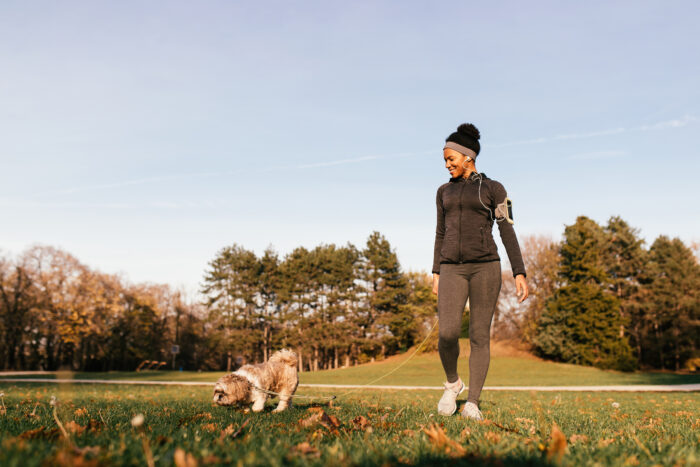
Pet care builds structure into the day. Walks happen at the same time. Feeding creates routine checkpoints. There’s less room to skip. Most fitness routines depend on motivation, while pet care is nonnegotiable. We sometimes fear letting our pets down even more than we fear disappointing our significant other.
How To Make the Most of Your Workouts Together
Extend the walk: A walk becomes more effective with a simple change in distance or route. Taking a new path makes you more engaged and aware. For dogs, that effect is amplified. Sniffing provides mental stimulation that’s just as important and often more impactful than the physical exercise of the walk itself. Letting them pause to explore new scents may seem minor, but it delivers real cognitive enrichment.
It’s a small shift with a meaningful payoff for your dog and a few extra steps for you.
Add light intensity: Alternate between walking and jogging; or choose routes with a slight incline to increase effort without overcomplicating the routine. This could also include exploring different terrain, like hiking, to naturally add variety.
Use play as movement: Incorporate quick training drills or agility-style movement into play. It keeps both of you engaged and strengthens your bond as your dog looks to you for guidance. No agility park or extra space? Compact fitness equipment, like the FitKinect from FitPaws, stores easily and work well even in small spaces.
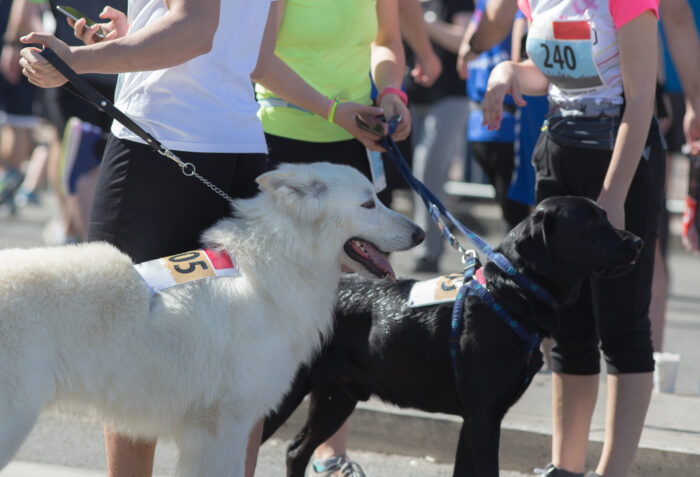
Find a group: Pet-friendly walking groups or running clubs add accountability and make the routine more social for both you and your pet.
Align your schedule: Align feeding, walks and activity with your existing routine to reduce friction and make consistency effortless. Dogs thrive on predictability, so syncing their schedule with yours not only simplifies your day but also supports better behavior, digestion and overall well-being.
More than physical benefits: Shared routines create space for connection, offering a consistent source of calm and a way to relieve stress. That time spent moving with your pet often becomes one of the few parts of the day that feel focused and uninterrupted.
The physical outcomes are clear: More movement results in improved endurance and better overall health. But the mental impact is often what keeps it going. Time spent with your pet encourages presence, helps reduce stress and shifts attention away from daily pressures. Over time, that creates a sense of balance that feels natural, not forced. There’s also the connection. Moving alongside a pet reinforces that sense of focus and ease, turning something simple into a reliable way to reset—both mentally and physically.
A practical fitness model: Fitness is often treated as something separate from daily life; something that has to be fit in. A routine built around a pet works differently. It’s already part of the day, with structure built in. Using that as the foundation is a more sustainable approach. In many cases, it’s the one that actually lasts.