Why Strangers Fly Across the World to Spend a Week Selling Books in Wigtown, Scotland
There’s a scene in the romantic comedy film Notting Hill where Hugh Grant’s character, William Thacker, is trying to sell a travel guide to Turkey. A customer picks it up and, with complete sincerity, asks if it’s about turkeys—as in the bird. Thacker patiently explains that it’s about the country. The customer pauses, mildly disappointed, and asks, “Not a lot of pictures then?”
Thacker, it’s worth noting, ran a travel bookshop in West London and appeared to sell roughly four books over the entire film. He was also, by most measures, perfectly content.
There’s a version of that life many of us—or perhaps just me—have quietly pined for: the bookshop owner fantasy. The counter and unhurried afternoons. The regular who wanders in at 3:15 every day. The life where you escape from whatever it is you actually do for a living and simply … sell books. In a charming town with moody weather. And just enough foot traffic to keep the lights on without ruining the peace.
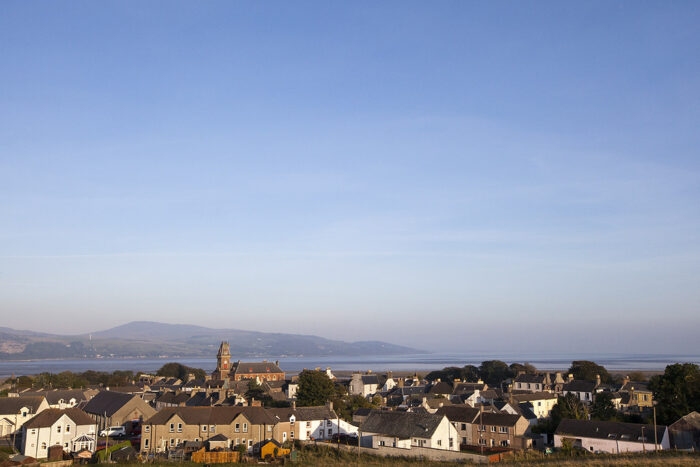
The Open Book is that, but it’s not a fictional trope. It sits on the main street of Wigtown in southwest Scotland—a town of fewer than 1,000 people that somehow has nearly a dozen independent bookshops, which says everything you need to know about the place and nothing useful about property values.
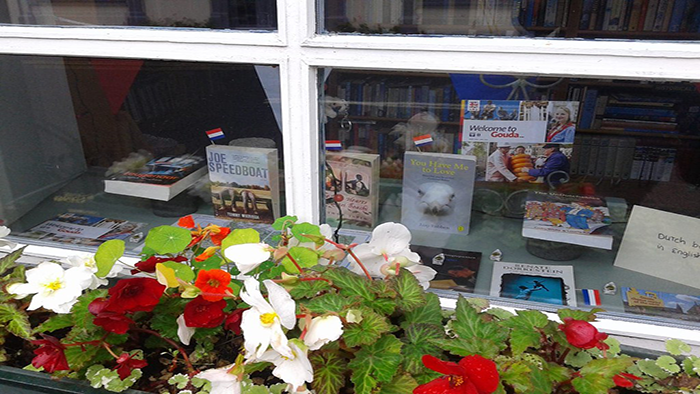
The shop is a working secondhand bookshop with a flat above it. You book the flat through Airbnb, and for the length of your stay, the shop is yours. The keys, the hours, the window display, the blackboard out front.
If you want to host a reading, there’s no one to stop you. If you want to close at noon and walk down to the Solway Firth, there’s no CEO monitoring your clicks. Every book you sell goes toward a good cause—the shop contributes around £10,000, or $13,447, a year to the Wigtown Festival Company‘s charitable work.
The money goes toward the organization’s annual book festival, community outreach and educational programs centered in a part of rural Galloway that has been quietly rebuilding itself around literature since the dairy and whisky industries left in the ’80s and ’90s.
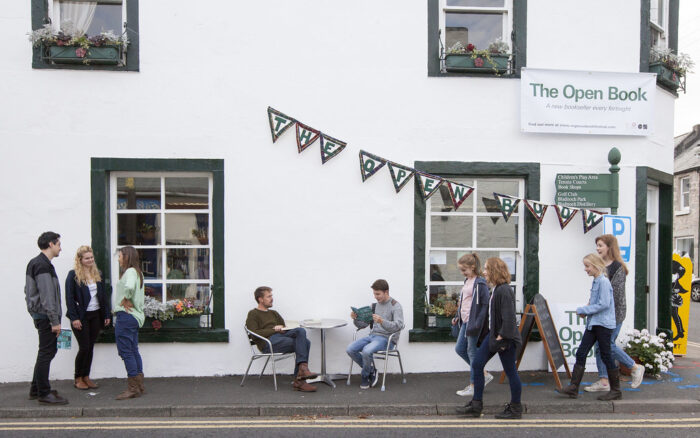
People have flown in from Buenos Aires, Argentina, Hong Kong, Hawaii and beyond for this experience. One well-known Argentine billionaire flew in on his private jet. A pastry chef from The Great British Bake Off television showmade custard tarts and shared them with strangers who wandered in off the street.
A map behind the bookshop counter is covered in pins, one per guest, and at this point, it looks like a very literary game of Risk.
The whole thing was dreamed up by author and filmmaker Jessica Fox, who figured she couldn’t be the only person carrying this particular fantasy around. She was right: the waiting list currently runs to about two years.
The shop operates under the Wigtown Festival Company, a nonprofit, which is why the fee is low and why none of this feels like a branded experience. Proceeds go toward the Festival Company’s work, including the annual Wigtown Book Festival each September, which draws tens of thousands of people to a town that by all logic shouldn’t be able to hold them.
What’s harder to explain is why it resonates the way it does. Maybe it’s the burnout, the screens, the political noise we’ve learned to live with. But it’s probably simpler than that.
For me, it’s the idea that you’re standing behind the counter in a small shop in an exotic location and someone walks in from Melbourne or Minneapolis and asks if you have Jane Eyre. You do. You start talking about Charlotte Brontë like she’s a mutual friend. For ten minutes, nothing else exists but that conversation and the book between you.
The shop runs Monday to Saturday, roughly 10 am to 4 pm, though hours move with whoever is behind the counter. If they step out, they leave a note on the door, which is either deeply charming or mildly infuriating. It depends on how badly you needed that specific book about Turkey.