Third-Party Reservation Scalpers Take Advantage of Fine Dining Table Shortages
There was a time when getting a table reservation meant refreshing a page at the exact, lucky moment. Now it’s about setting alerts, tracking cancellations, checking multiple platforms and navigating a system that extends well beyond any single app.
Some of these reservations are Taylor Swift x Ticketmaster 2022 level.
Today’s most sought-after tables aren’t necessarily absent from platforms like Resy or OpenTable. But they’re no longer fully represented there either.
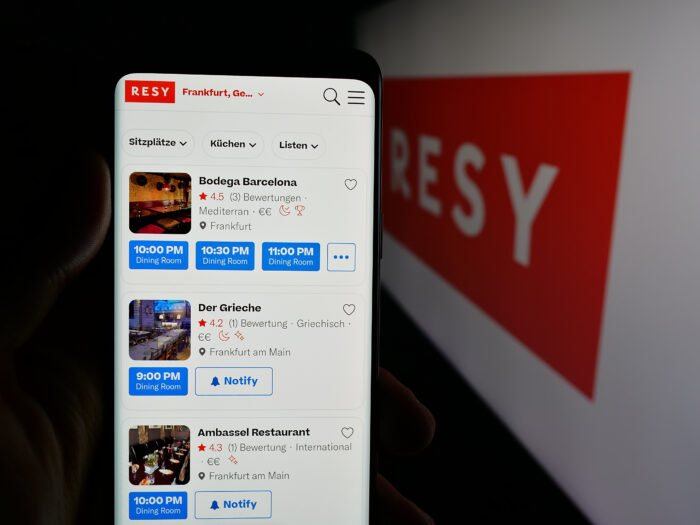
Instead, they exist across a disjointed system of alerts, waitlists, deposits, loyalty perks and even resale markets. Yes, a growing number of third-party tools now sit on top of these reservation platforms, constantly scanning them for cancellations, sending real-time alerts and often automatically booking reservations the moment they become available.
Adding another layer of complexity is a tiered nature of some restaurant reservations that involves inventory being routed through concierge services, memberships or preferred guest lists.
The Platform Is Only the Starting Point
Reservation platforms have become more sophisticated in helping diners chase demand, but that demand has outpaced what they can realistically offer.
A decade after launching its “Notify” feature, Resy noted it has generated millions of “Hot Table” alerts, proving how competitive reservations have become.
“The best time to click the Notify button for that table you’re trying to lock down? Sunday still reigns supreme as the day of the week when your Notify is most likely to convert into a reservation,” stated the “2025 Resy Retrospective.”
Engaging in these new habits have almost become part of the experience, morphing a reservation from a simple transaction into an achievement worth celebrating.
At the same time, demand is concentrating around a smaller pool of restaurants. OpenTable’s “Top 100 Restaurants in America” list reinforces just how much attention is being directed toward a small group of establishments. The list’s most in-demand restaurants, including Don Angie in New York and Kase x Noko in Nashville, generate some of the highest volumes of “Notify Me” alerts.
When this happens, availability becomes less about whether a table exists and more about whether you can access it before someone else does.
Scarcity Creates a Secondary Market
A National Restaurant Association release in 2025 noted that third-party platforms are acquiring or scalping reservations from legit booking systems, then reselling them, often at a premium.
“Unlike ticket scalpers in entertainment, these third-party reservation sellers contribute nothing to the dining experience,” said Steve Woodruff, general manager of Commander’s Palace in New Orleans.
“They don’t make the food better, the service more seamless or the atmosphere more enjoyable; they simply make it more expensive and frustrating,” he added.
The association’s polling noted nearly two in five diners are aware of these third-party services. About 15% indicated they’ve paid to use one themselves. Meanwhile, 72% of respondents believed these practices make certain restaurants even harder to access.
“The more technology helps us find efficiency in our daily lives, the more it also creates new ways for people to game the system,” said Mike Whatley, vice president of state affairs and grassroots advocacy at the National Restaurant Association.
Amy Zhou, vice president of operations and a partner at Gracious Hospitality Management, noted these practices can also introduce risks for restaurants.
“Reservation scalping hurts our industry, diners and restaurants—period,” she said, adding that no-shows tied to these practices can reach as high as 20-25% on certain nights.
Legislation is being introduced in response, but the existence of a resale market points to a larger shift: Reservations themselves have become a form of inventory.
Intentional Access Management
Part of the disconnect between what diners see and what actually exists comes down to operations. For one, capacity is shrinking. The average size of new restaurants has decreased every year since 2019, per Resy, driven by rising costs, staffing constraints and a shift toward more intimate, experience-driven formats.
Naturally, fewer seats mean fewer reservations. Reservation demand is also being spread across the evening.
“More people dined between 5 p.m. and 6 p.m. than in the three hours between 8 p.m. and 11 p.m.,” noted “The 2025 Resy Retrospective,” which added that more people currently dine at 4 p.m. then at 9 p.m.
Operators are also altering how access is managed when demand exceeds supply. Many prioritize consistency and control over maximum visibility. That includes deposits; cancellation policies; and streamlined reservation systems, POS platforms and CRM tools.
“When you talk to restaurant owners, one thing is clear: Time is the scarcest resource,” said Junaid Shams, chief operation officer of Resy. “Most operators are juggling a hundred details before service even begins.”
In this era of fragmented access, what’s changed most isn’t the reservation; it’s what it represents. Dining out has shifted toward a more experience-driven format—one where atmosphere, storytelling and exclusivity carry as much weight as the food.